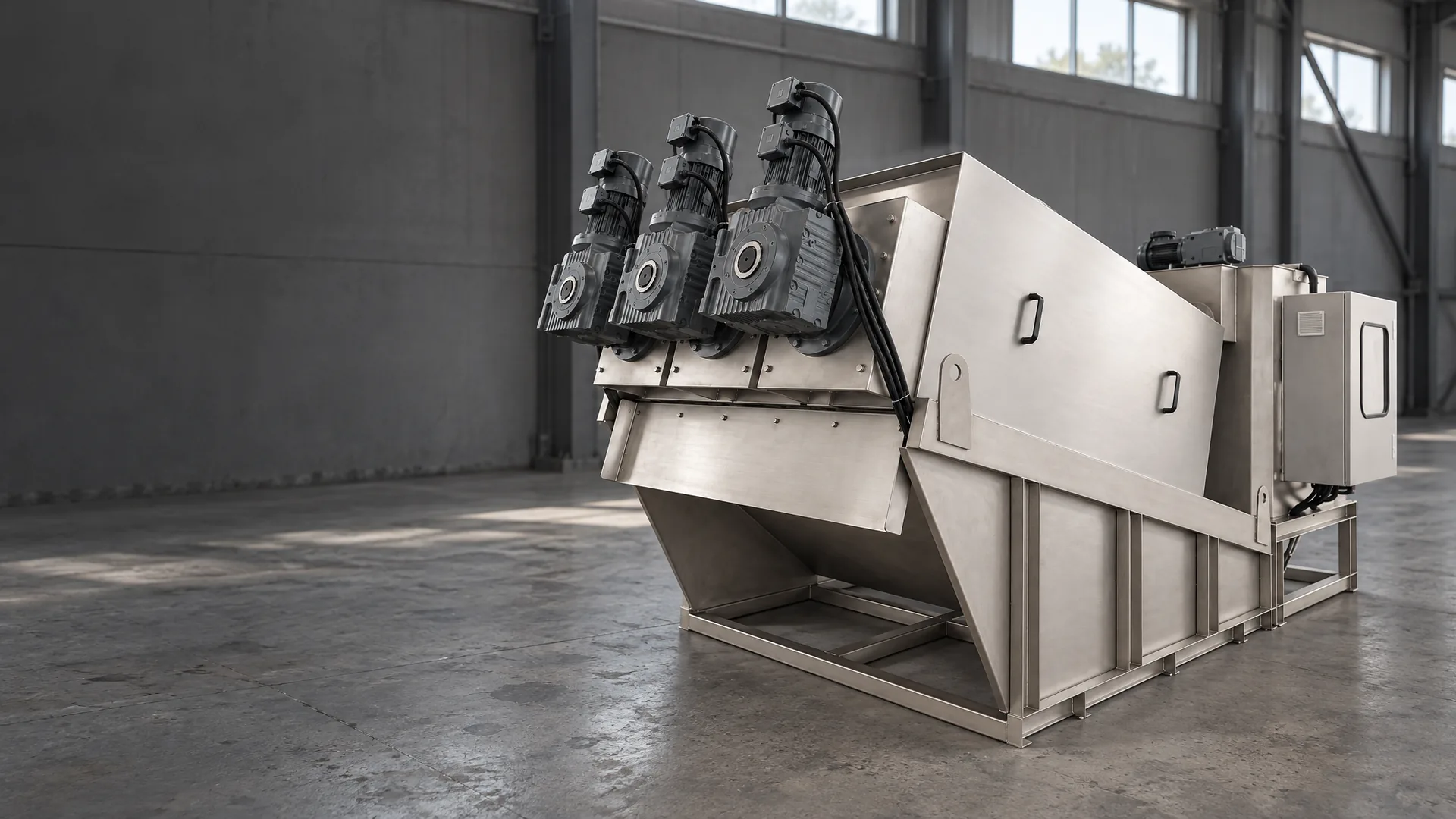
Engineering & Process Design
Application-specific engineering for optimal dewatering results
Engineering Approach
Engineering Services
Process Design
Complete process flow design from sludge source to cake disposal
Equipment Sizing
Screw press selection based on DS load, flow rate, and sludge type
Polymer Selection
Laboratory and pilot-scale polymer screening and optimization
System Integration
Integration into existing plant infrastructure, controls, and SCADA
Material Selection
304, 316, 316L, or special alloy selection based on media analysis
Performance Validation
Pilot testing and on-site trials with your actual sludge
Design & Engineering Topics
Screw Press Design
Screw press design fundamentals: screw geometry, screen configuration, zones, and how design parameters drive dewatering performance.
Design Criteria
Key design criteria for screw press selection: dry solids load, feed concentration, cake target, polymer, and material of construction.
Sludge Dewatering Design
Designing a complete sludge dewatering system: from sludge source and conditioning to dewatering, filtrate return, and cake handling.
Process Design
Process design for screw press dewatering: mass balance, operating strategy, control philosophy, and integration with the treatment plant.
Process Flow
The screw press dewatering process flow: sludge feed, polymer dosing, flocculation, dewatering, filtrate return, and cake discharge.
Hydraulic Design
Hydraulic design for screw press systems: feed pump selection, pipe sizing, filtrate drainage, and gravity return lines.
Solids Loading
Solids loading is the mass of dry solids processed per hour — the primary basis for screw press capacity engineering.
Dry Solids Loading
Engineering the dry solids load: measurement, design margins, and how DS loading maps to RF series capacity.
Polymer Conditioning
Polymer conditioning engineering: selecting flocculant type, charge, dose, make-up concentration, and dosing point for optimal flocs.
Flocculation Design
Flocculation design for screw press systems: reaction tank volume, mixing energy, residence time, and floc protection.
Filtrate Handling
Filtrate handling engineering: drainage, return routing, TSS quality, and impact on the wastewater treatment plant.
Cake Handling
Cake handling engineering: conveying, storage, and disposal routes for dewatered sludge cake — screw conveyors, skips, and silos.
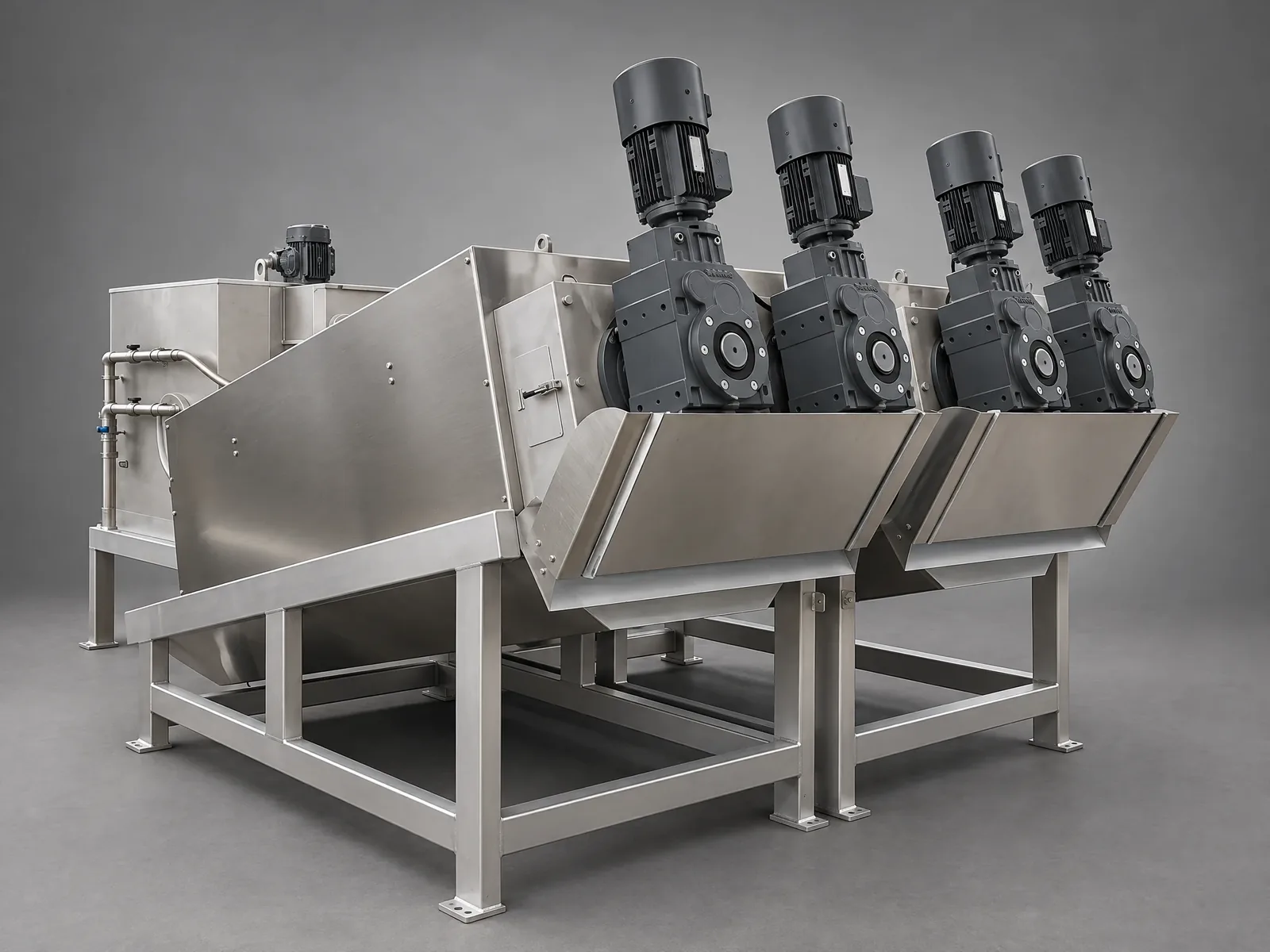
Four-Screw Configuration
Two twin dewatering units on a common stainless steel frame — maximum throughput with a small footprint.
Explore the RF seriesReady to Find the Right Screw Press?
Our engineering team provides application-specific screw press sizing and selection — based on your sludge type, flow rate, and dewatering targets.