Engineering
Polymer Conditioning
Engineering the flocculant for reliable dewatering
Getting Conditioning Right
Polymer conditioning is often the single biggest factor in dewatering performance. The right polymer type (cationic, anionic, or non-ionic), charge density, and molecular weight must be matched to the sludge, then dosed at the correct concentration and point.
Under-dosing leaves fine solids in the filtrate; over-dosing wastes money and can produce sticky, over-conditioned flocs. Jar tests and pilot trials establish the optimum.
Conditioning Variables
- Polymer type and charge matched to sludge
- Make-up concentration and maturation time
- Dose rate (typically 5–15 kg/t DS)
- Dosing point and mixing energy
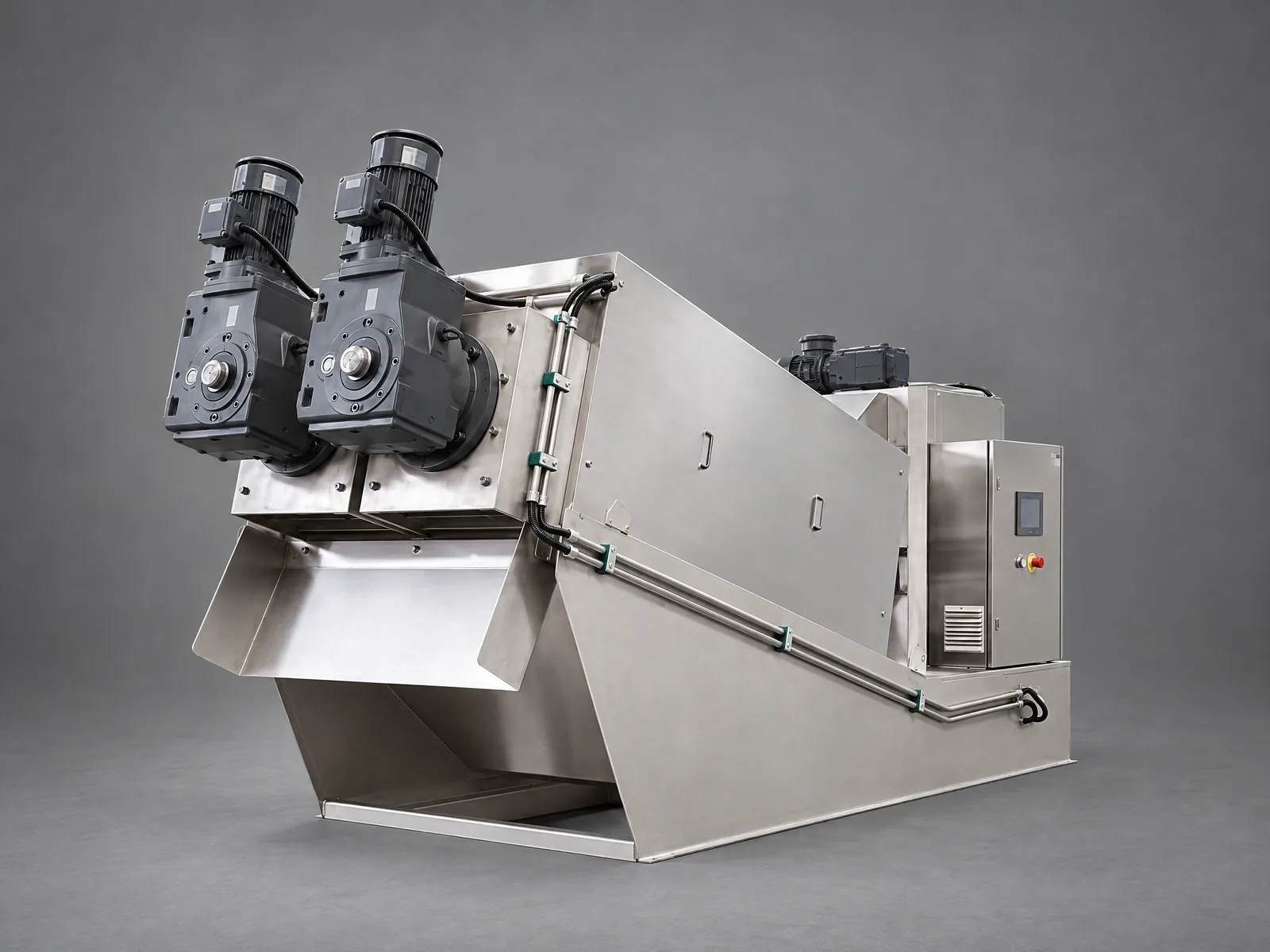
RF Series Screw Press
Two-Screw Unit with Control Panel
Ready-to-connect dewatering unit with touch panel control, flocculation tank and cake discharge chute.
Explore the RF seriesEngineering Assessment
Ready to Find the Right Screw Press?
Our engineering team provides application-specific screw press sizing and selection — based on your sludge type, flow rate, and dewatering targets.