Sizing
Polymer Dose
The conditioning input that enables dewatering
Polymer dose is usually expressed as kg of active polymer per tonne of dry solids (kg/t DS). It is the amount of flocculant needed to form strong, free-draining flocs from the sludge.
Dosing on a dry-solids basis
Because polymer works on the solids, dose is normalised to dry solids (kg/t DS) rather than to sludge volume. This lets the optimum stay meaningful as flow and concentration vary. The right dose depends heavily on sludge type: fibrous industrial sludge may need relatively little, while light biological sludge needs more. The optimum is confirmed by floc quality and filtrate clarity, not by a fixed number.
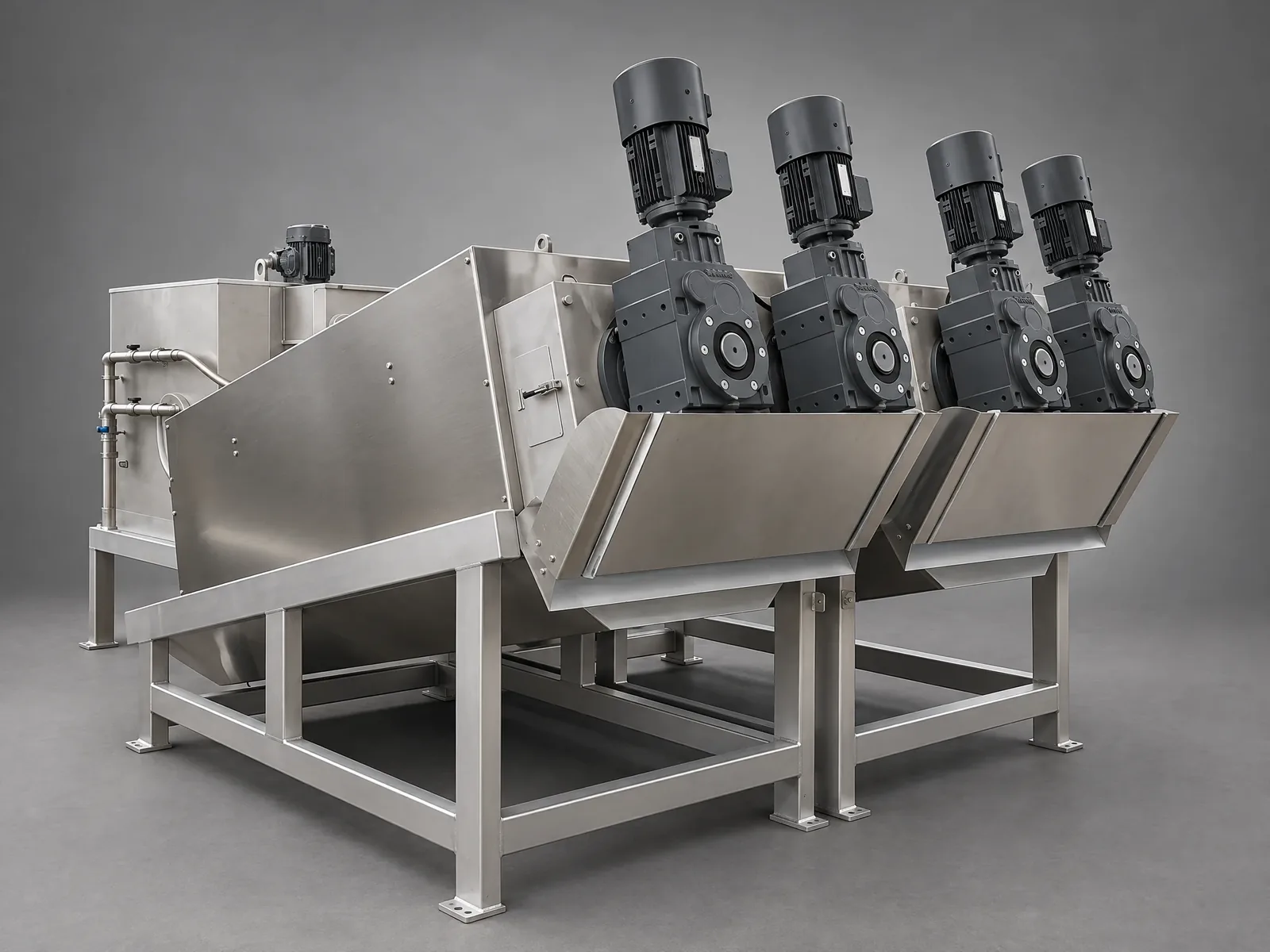
RF Series Screw Press
Four-Screw Configuration
Two twin dewatering units on a common stainless steel frame — maximum throughput with a small footprint.
Explore the RF seriesEngineering Assessment
Ready to Find the Right Screw Press?
Our engineering team provides application-specific screw press sizing and selection — based on your sludge type, flow rate, and dewatering targets.