
Operation & Maintenance
Polymer Dose Adjustment
Finding and holding the optimum polymer dose
Polymer conditioning is the single biggest lever on screw press performance. The right dose forms strong, free-draining flocs; too little leaves fines in the filtrate, too much wastes chemical and can produce a slimy cake and cloudy filtrate.
Reading the dose from the process
| Observation | Likely dose state | Action |
|---|---|---|
| Cloudy filtrate, fine solids escaping | Under-dosed | Increase polymer in small steps |
| Strong flocs, clear filtrate, firm cake | Optimum | Hold and monitor |
| Slimy cake, stringy flocs, cloudy filtrate | Over-dosed | Reduce polymer gradually |
Adjust in small steps
Change polymer dose gradually and allow the process time to respond before judging the result, because flocculation and cake formation lag any change by several minutes. Track dose as active polymer per tonne of dry solids so you can compare performance as feed solids vary. When sludge character changes — season, source or age — the optimum dose shifts, so re-check floc quality after any significant change.
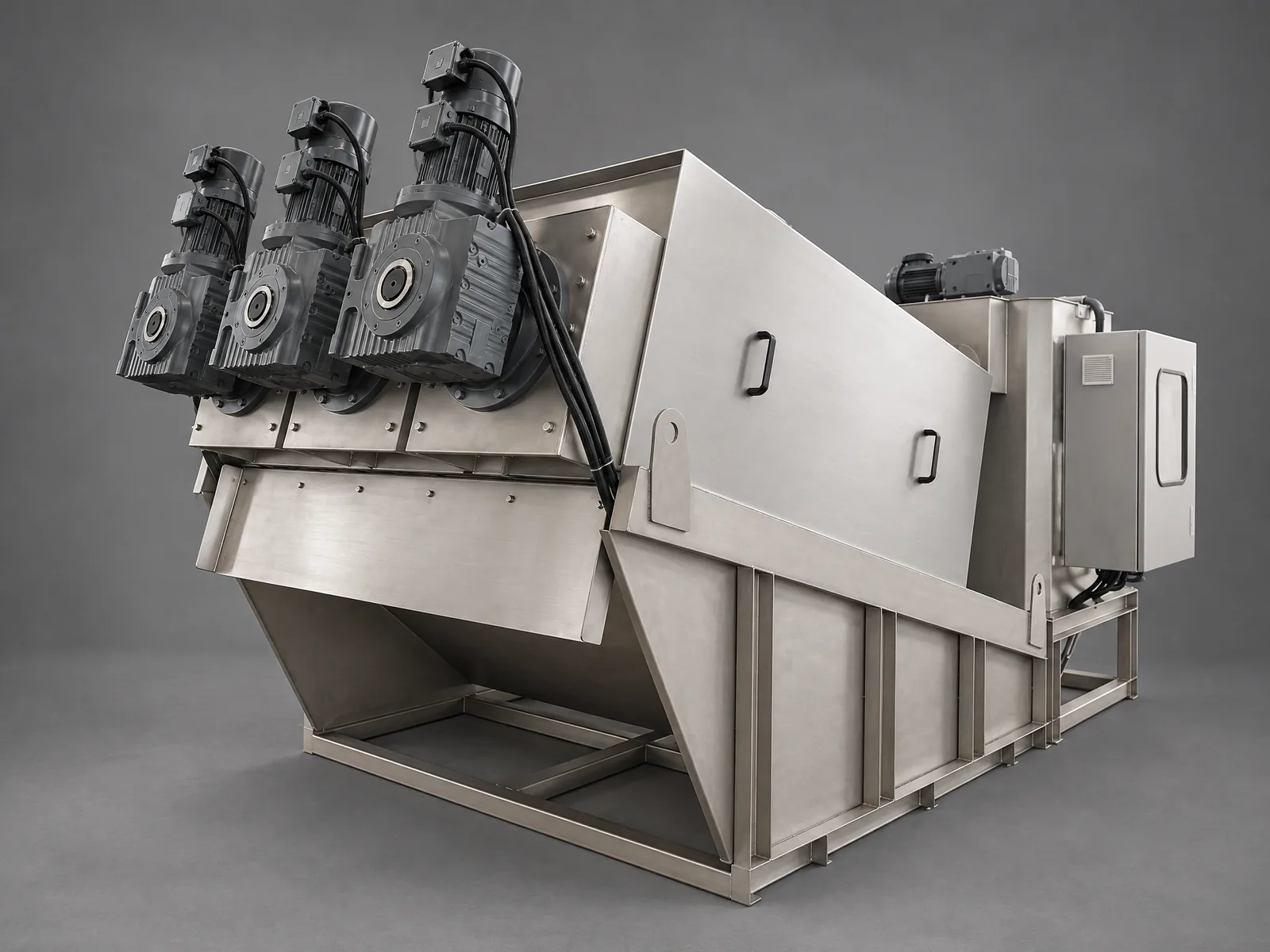
RF Series Screw Press
Three-Screw Dewatering Machine
Individually driven screws at low speed — quiet, energy-efficient and easy to maintain.
Explore the RF seriesEngineering Assessment
Ready to Find the Right Screw Press?
Our engineering team provides application-specific screw press sizing and selection — based on your sludge type, flow rate, and dewatering targets.