Troubleshooting
Poor Flocculation
Flocs are weak, small or fail to form
Good dewatering starts with strong, visible flocs in the flocculation tank. When flocs are small, stringy or absent, water will not release and the press cannot form a firm cake. Flocculation faults stem from dose, mixing, timing or sludge chemistry.
The symptom
Good dewatering starts with strong, visible flocs in the flocculation tank. When flocs are small, stringy or absent, water will not release and the press cannot form a firm cake. Flocculation faults stem from dose, mixing, timing or sludge chemistry.
Causes and corrective actions
| Possible cause | Corrective action |
|---|---|
| Incorrect polymer dose | Adjust dose until firm, free-draining flocs form. |
| Too much or too little mixing | Tune mixing energy — gentle enough not to shear flocs. |
| Insufficient flocculation time | Increase residence in the flocculation tank. |
| Sludge chemistry change (pH, source) | Re-test and adjust polymer to the new sludge. |
RF Series Screw Press
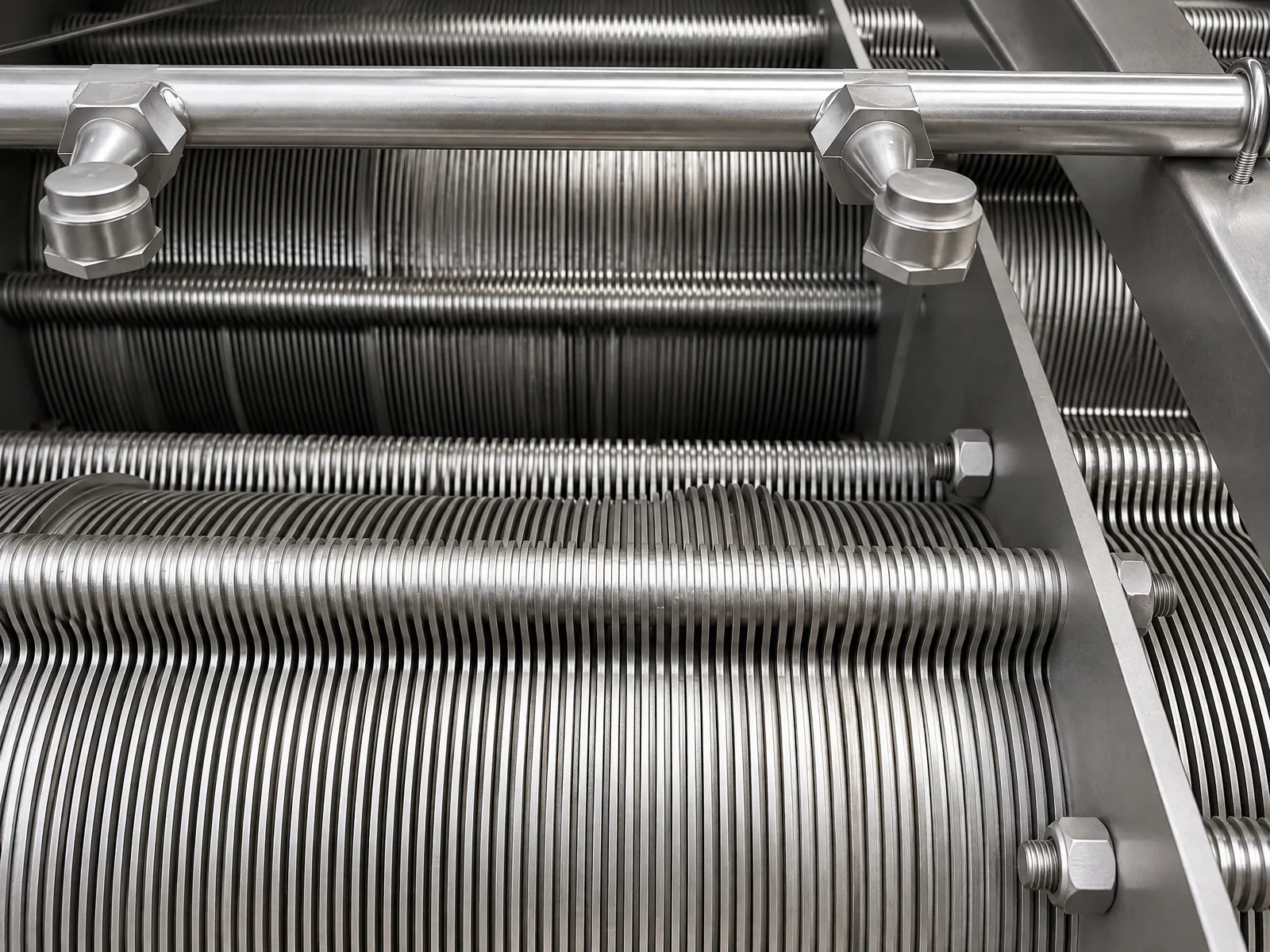
Self-Cleaning Ring Disc Filter Elements
Fixed and moving stainless steel rings form the filtration gaps and keep them clear continuously — no filter cloth, no clogging.
Explore the RF seriesEngineering Assessment
Ready to Find the Right Screw Press?
Our engineering team provides application-specific screw press sizing and selection — based on your sludge type, flow rate, and dewatering targets.