Technology
What Is a Screw Press?
Mechanical sludge dewatering by continuous screw conveyance
Definition
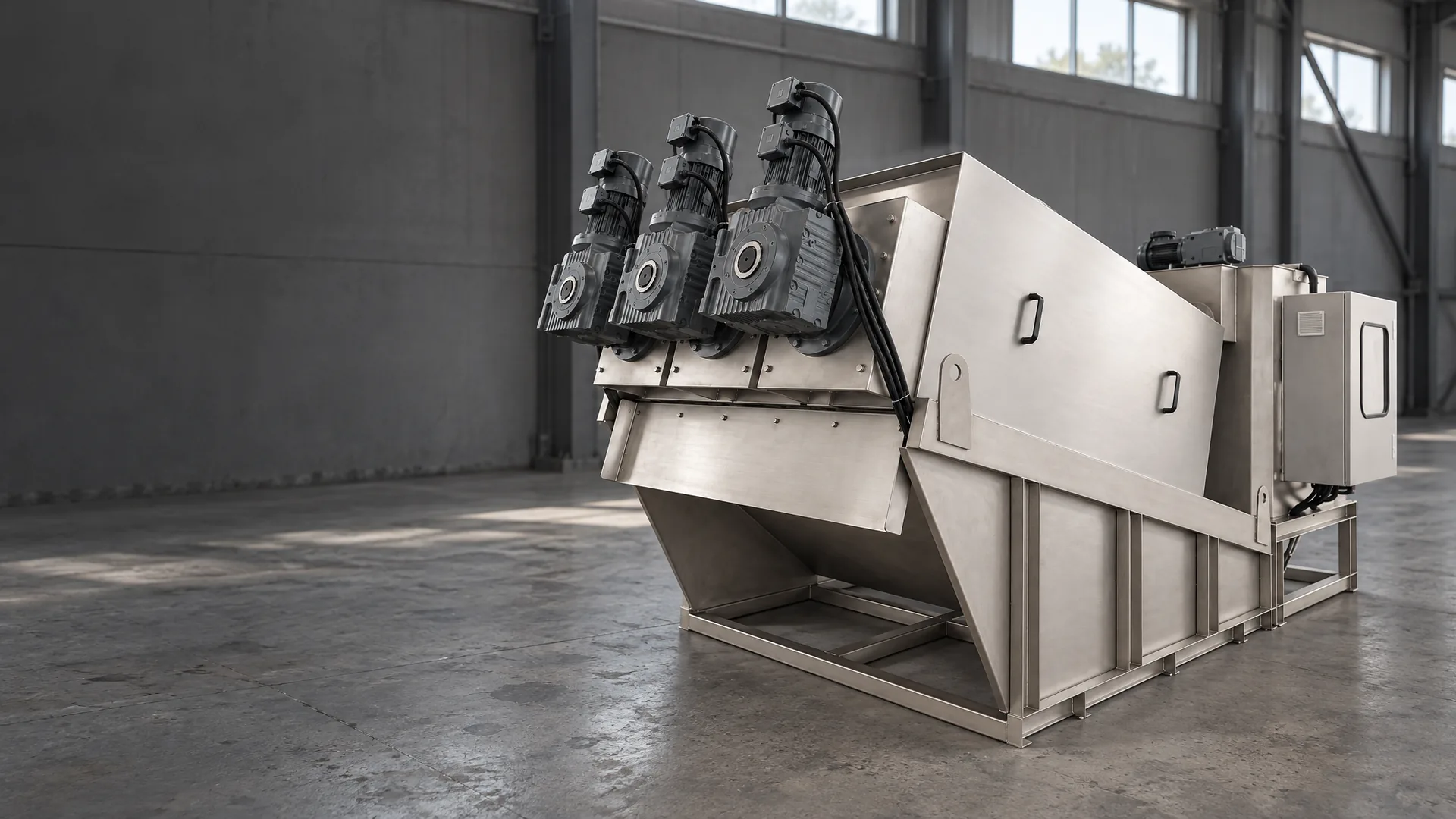
A screw press is a continuous mechanical dewatering device used in municipal and industrial wastewater treatment. It separates water from sludge by conveying conditioned material through a progressively narrowing filtration zone using a slowly rotating screw shaft.
The key distinction of screw press technology lies in its low-speed, low-energy operating principle. Unlike centrifuges that rely on high centrifugal forces, a screw press achieves dewatering through gentle mechanical pressure and gravity-assisted filtration.
Types of Screw Presses
Multi-Disc Screw Press
Uses alternating fixed and moving ring discs for filtration. Self-cleaning design prevents clogging.
Cylindrical Screen Screw Press
Uses a perforated cylindrical screen basket surrounding the screw for filtration.
Stacked Disc Screw Press
Similar principle to multi-disc designs with stacked filtration elements.
Key Characteristics
- Continuous, unattended operation with minimal supervision
- Low energy consumption — typically 0.02–0.1 kWh per m³ of sludge
- Low noise and vibration levels due to slow screw rotation
- Compact footprint relative to belt filter presses
- Suitable for a wide range of sludge types and concentrations
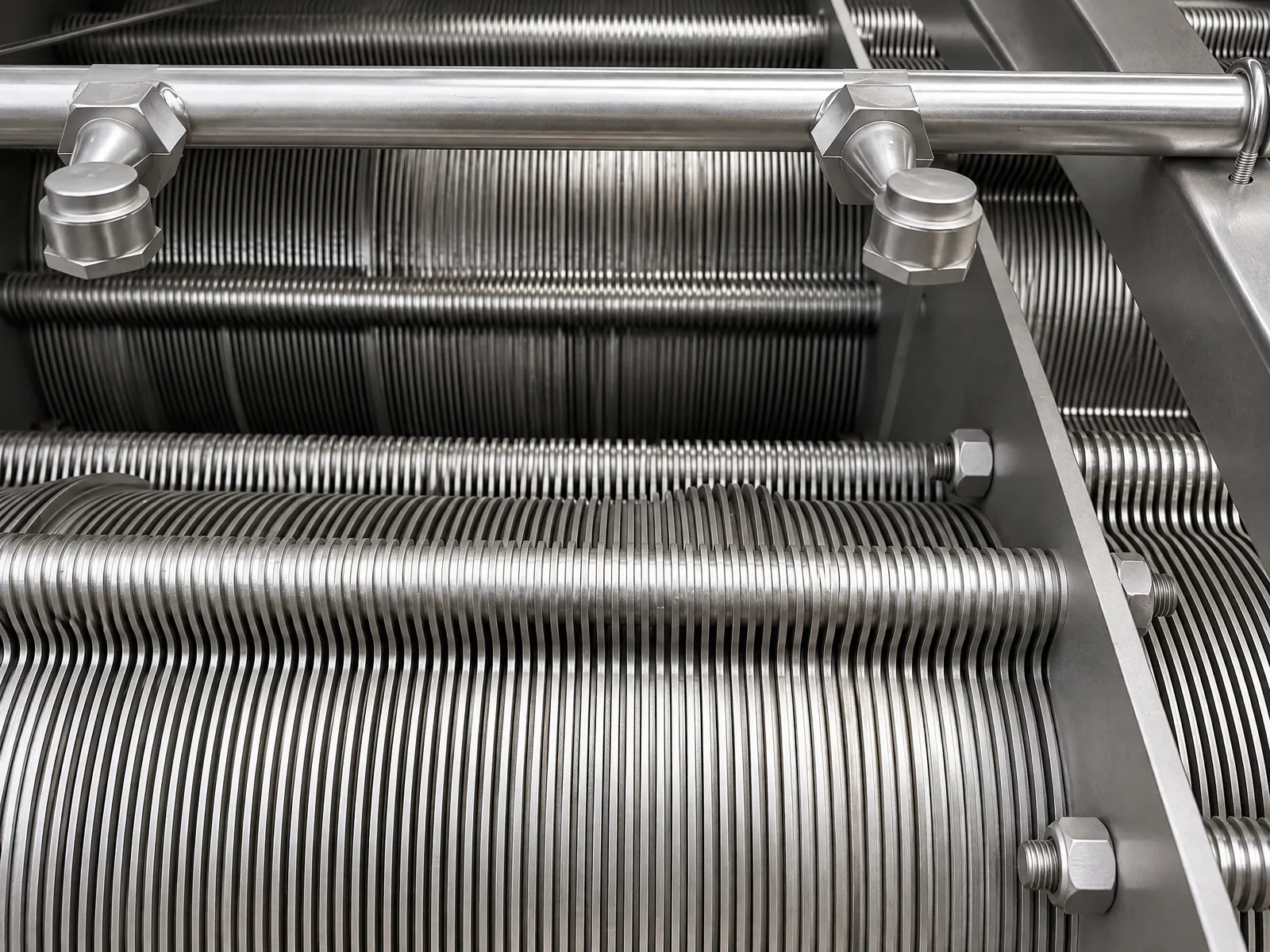
RF Series Screw Press
Self-Cleaning Ring Disc Filter Elements
Fixed and moving stainless steel rings form the filtration gaps and keep them clear continuously — no filter cloth, no clogging.
Explore the RF seriesEngineering Assessment
Ready to Find the Right Screw Press?
Our engineering team provides application-specific screw press sizing and selection — based on your sludge type, flow rate, and dewatering targets.