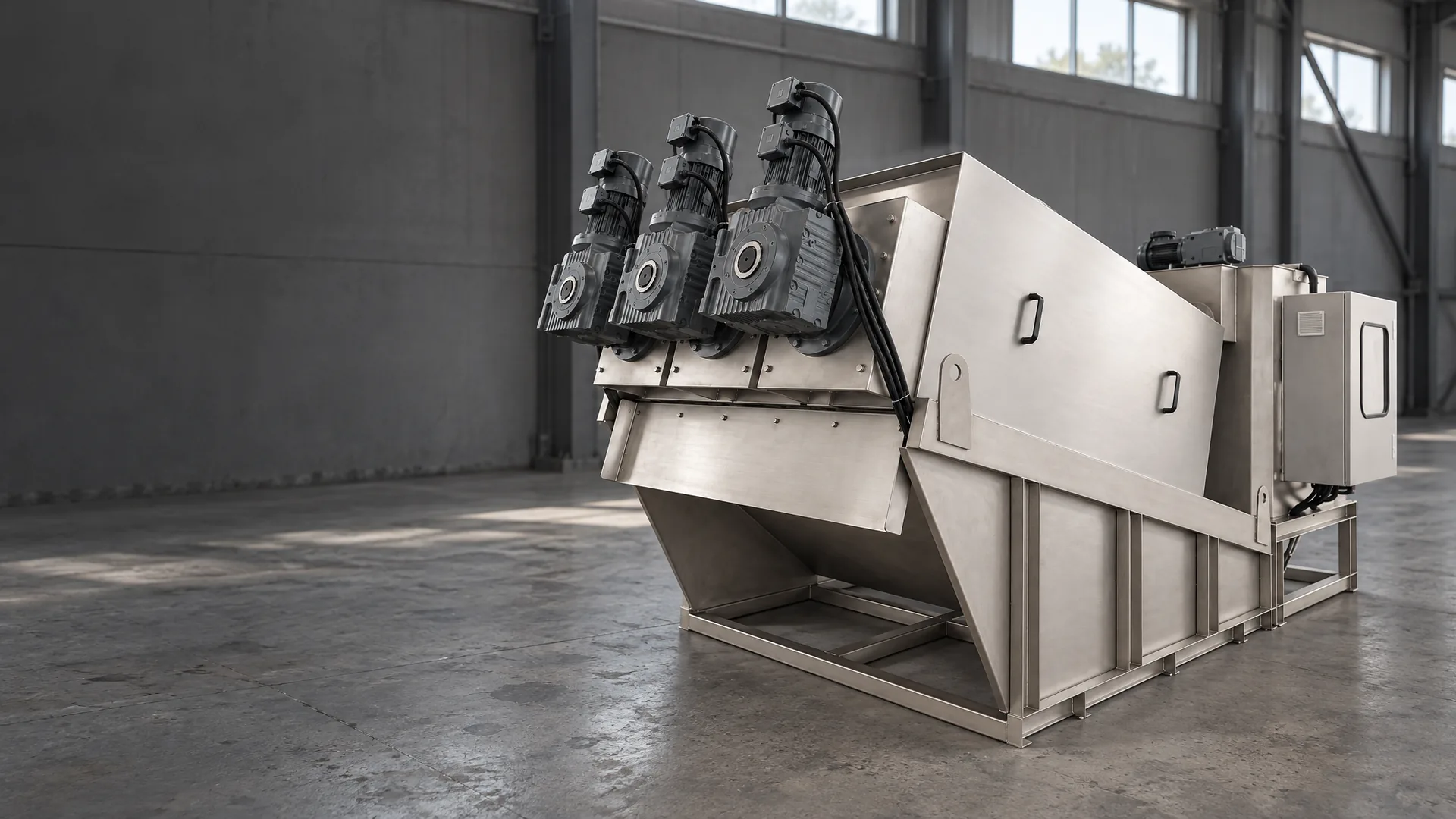
Screw Press Working Principle
The engineering behind continuous sludge dewatering
Fundamental Principle
Key Design Elements
Screw Shaft
Hollow or solid shaft with decreasing pitch toward the discharge end. Rotation speed: typically 0.5–3 RPM.
Filtration Elements
Fixed and moving ring discs (multi-disc type) or perforated screen basket. Define the filtration gap width.
Back-Pressure System
Adjustable back-pressure plate or cone at the discharge end controls cake density and dry solids content.
Drive Unit
Low-speed gear motor provides torque for screw rotation. Very low energy consumption.
Wash Water System
Periodic spray wash keeps filtration surfaces clean. Typical consumption: 24–320 L/h depending on model size.
Self-Cleaning Mechanism
Moving rings continuously clean the filtration gaps through relative motion, preventing blockage.
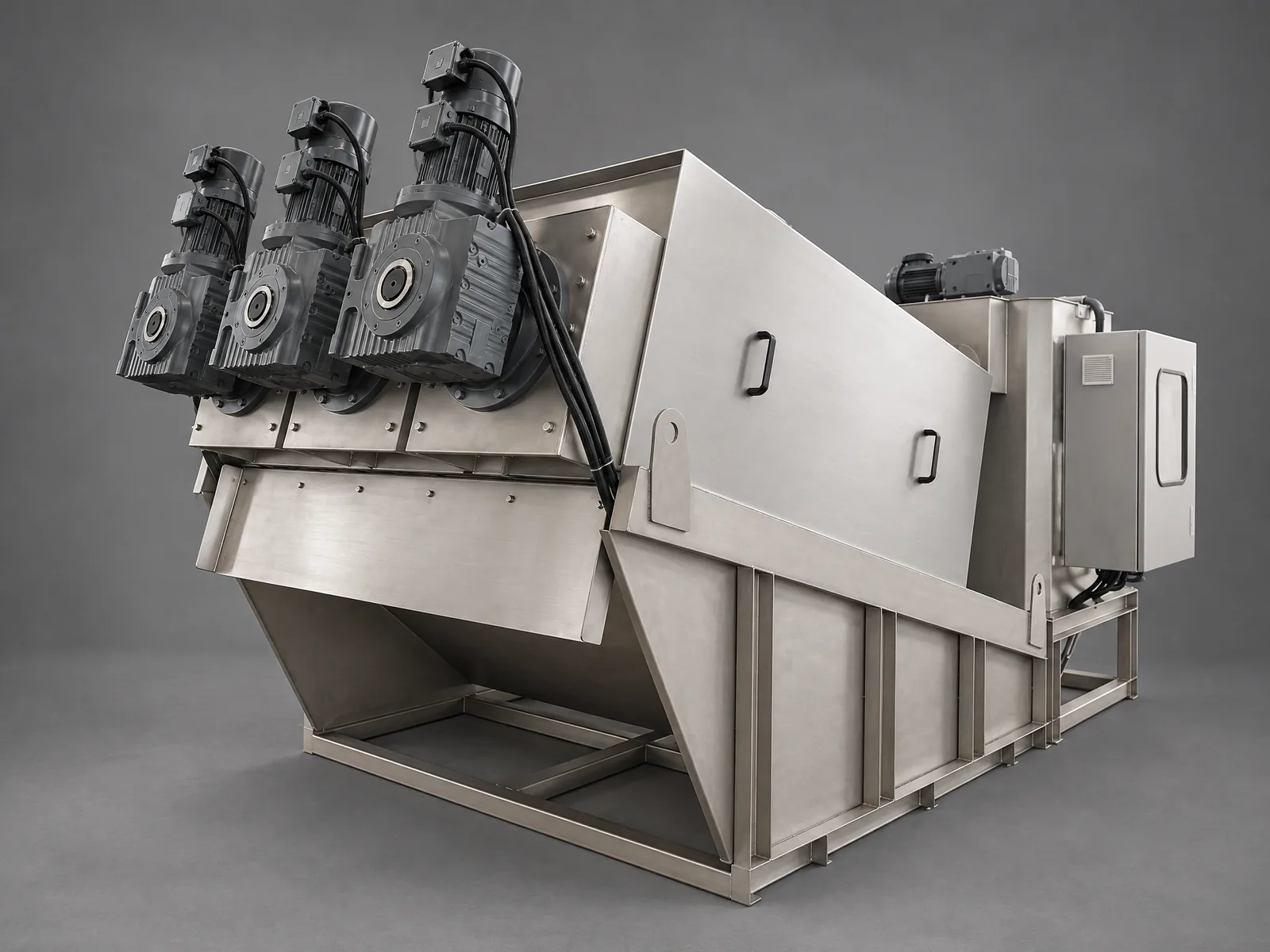
Three-Screw Dewatering Machine
Individually driven screws at low speed — quiet, energy-efficient and easy to maintain.
Explore the RF seriesReady to Find the Right Screw Press?
Our engineering team provides application-specific screw press sizing and selection — based on your sludge type, flow rate, and dewatering targets.