Technology
Mechanical Sludge Dewatering
Comparing mechanical dewatering technologies for sludge treatment
What Is Mechanical Sludge Dewatering?
Mechanical sludge dewatering is the process of removing water from wastewater sludge using physical forces — pressure, vacuum, centrifugal force, or a combination. The goal is to reduce sludge volume and weight for more economical transport and disposal.
The four main technologies used in municipal and industrial wastewater treatment are: screw press, belt filter press, centrifuge (decanter), and filter press (chamber or membrane).
Technology Comparison
| Criteria | Screw Press | Belt Press | Centrifuge | Filter Press |
|---|---|---|---|---|
| Energy | Very low | Low | High | Low–Medium |
| Noise | Very low | Low | High | Low |
| Wash Water | Minimal | High | None | Medium |
| Self-Cleaning | Yes | No | N/A | No |
| Oily Sludge | Excellent | Poor | Good | Poor |
| Footprint | Compact | Large | Medium | Large |
| Operator Need | Minimal | High | Medium | High |
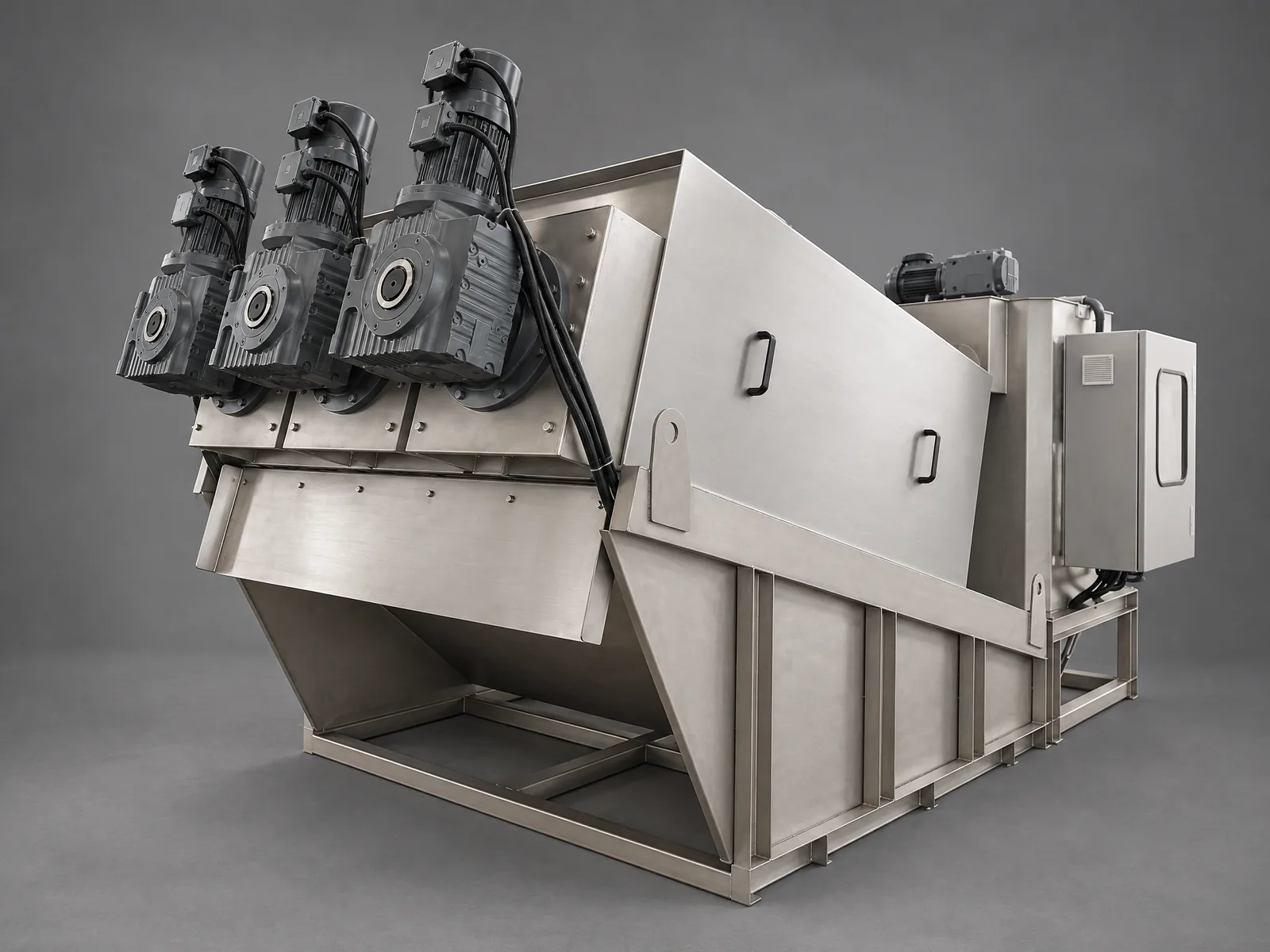
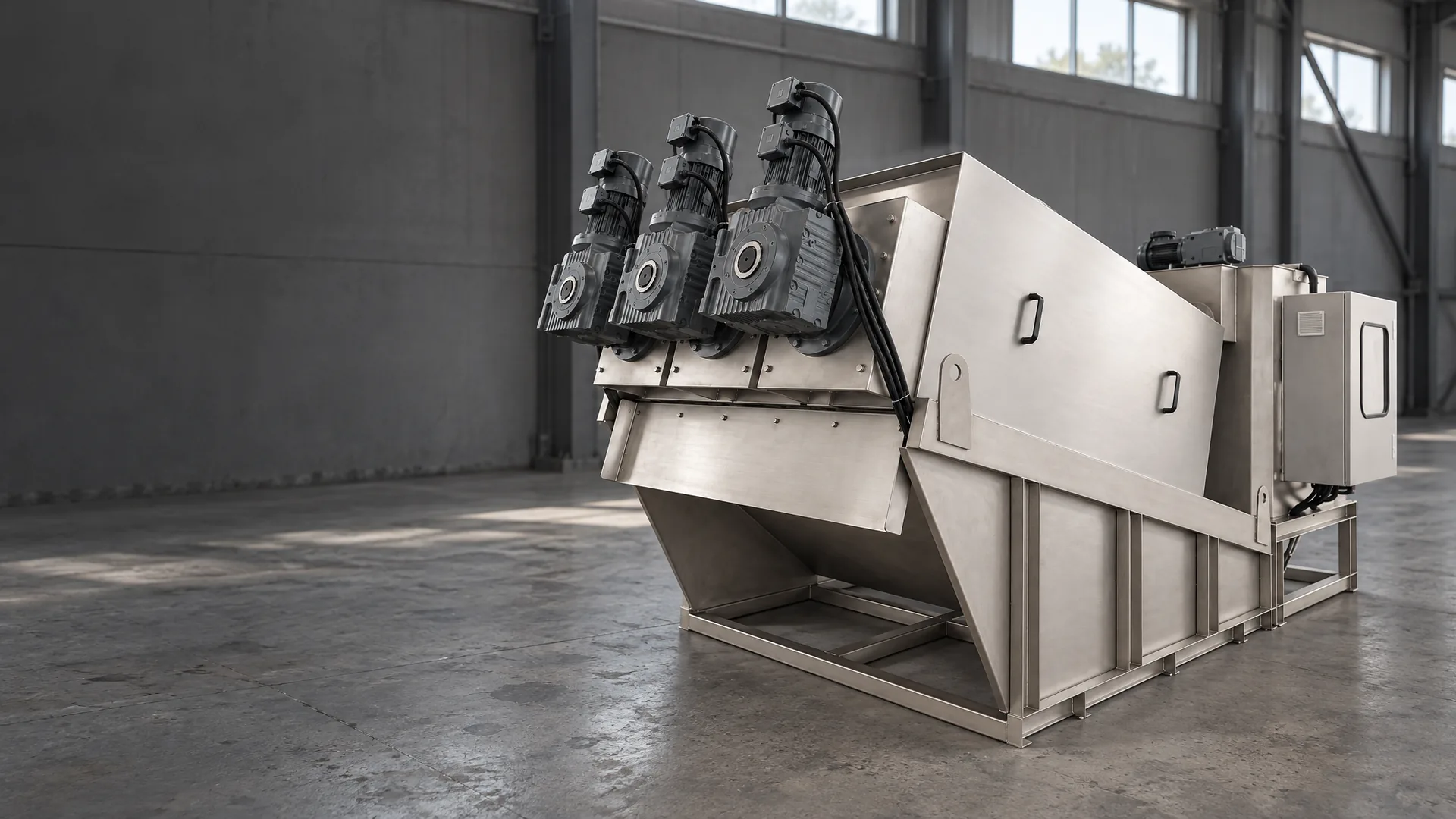
RF Series Screw Press
Three-Screw Dewatering Machine
Individually driven screws at low speed — quiet, energy-efficient and easy to maintain.
Explore the RF seriesEngineering Assessment
Ready to Find the Right Screw Press?
Our engineering team provides application-specific screw press sizing and selection — based on your sludge type, flow rate, and dewatering targets.