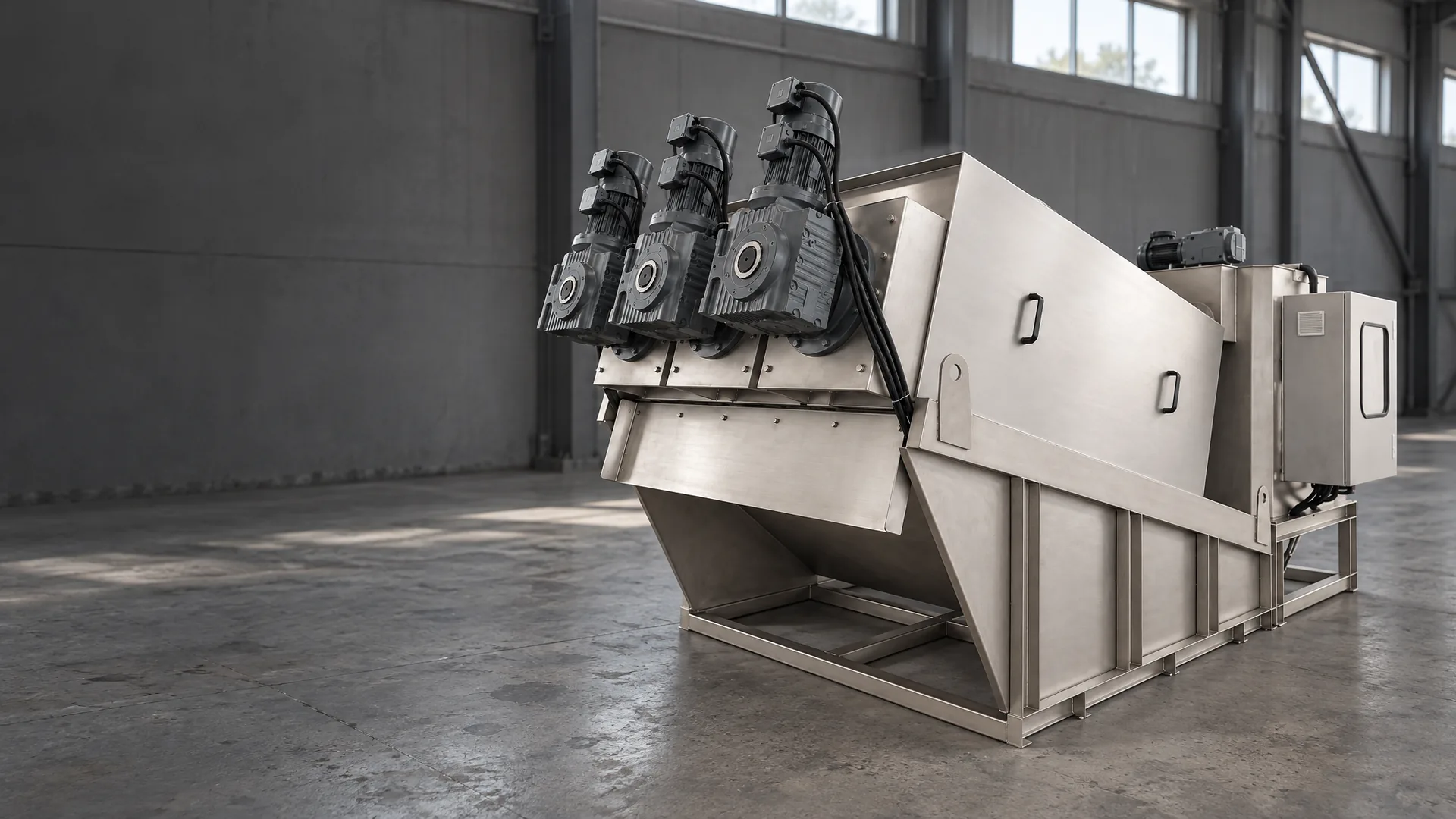
How Does a Screw Press Work?
From feed sludge to dewatered cake — the complete process
Process Overview
Operating Steps
- 1Polymer Conditioning
Liquid sludge is mixed with polymer flocculant to form stable flocs. The polymer bridges fine particles into larger aggregates that can be mechanically separated.
- 2Flocculation
The conditioned sludge enters a flocculation chamber where gentle agitation allows flocs to mature and strengthen before entering the press.
- 3Gravity Thickening Zone
In the first section of the press, free water drains by gravity through the filtration gaps. The sludge begins to thicken as it moves along the screw.
- 4Pressure Dewatering Zone
As the screw pitch decreases and internal pressure increases, bound water is forced through the filtration gaps. The sludge is progressively compressed.
- 5Cake Discharge
The dewatered sludge cake is discharged at the end of the screw against a back-pressure plate. Cake dryness can be adjusted by modifying screw speed and back pressure.
- 6Self-Cleaning
Moving ring discs continuously clear the filtration gaps, preventing clogging and enabling stable long-term operation.
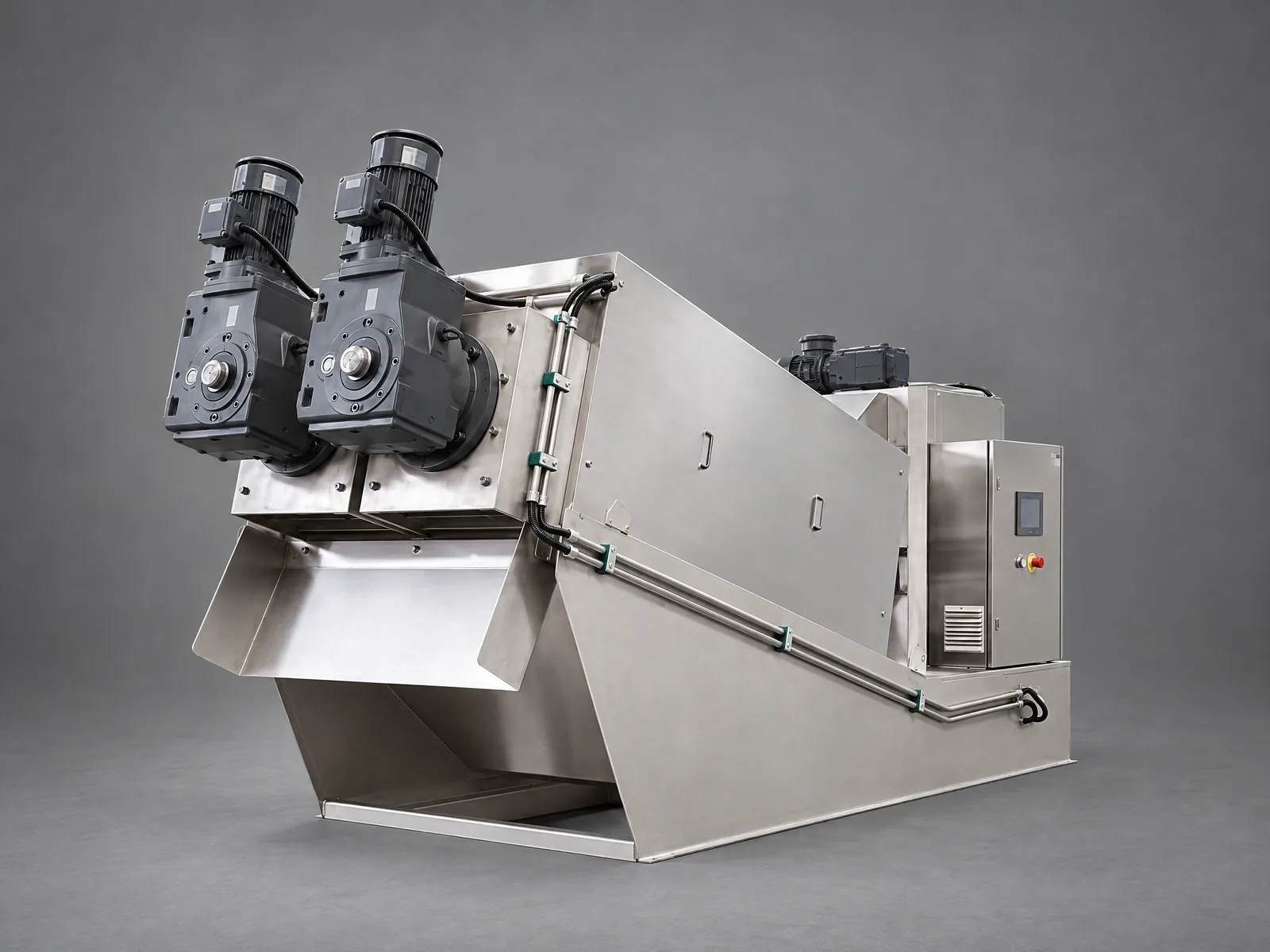
Two-Screw Unit with Control Panel
Ready-to-connect dewatering unit with touch panel control, flocculation tank and cake discharge chute.
Explore the RF seriesReady to Find the Right Screw Press?
Our engineering team provides application-specific screw press sizing and selection — based on your sludge type, flow rate, and dewatering targets.