Sludge Types
Waste Activated Sludge
Dewatering waste activated sludge with screw press technology
About WAS
Waste activated sludge is the excess biomass produced in the biological (secondary) treatment stage of wastewater treatment plants. It is typically very dilute (0.5–1.5% DS) and consists primarily of bacterial cells and extracellular polymeric substances.
WAS is often considered the most challenging municipal sludge type to dewater due to its biological nature, high bound water content, and compressibility. However, with proper polymer conditioning and a well-sized screw press, consistent dewatering results are achievable.
Typical Dewatering Parameters
| Parameter | Range | Notes |
|---|---|---|
| Feed DS | 0.5–1.5% | Lower end typical for extended aeration |
| Cake DS | 15–22% | Depends on SRT, temperature, conditioning |
| Polymer dose | 8–15 kg/t DS | Active polymer per tonne dry solids |
| Capture rate | >95% | With optimized polymer conditioning |
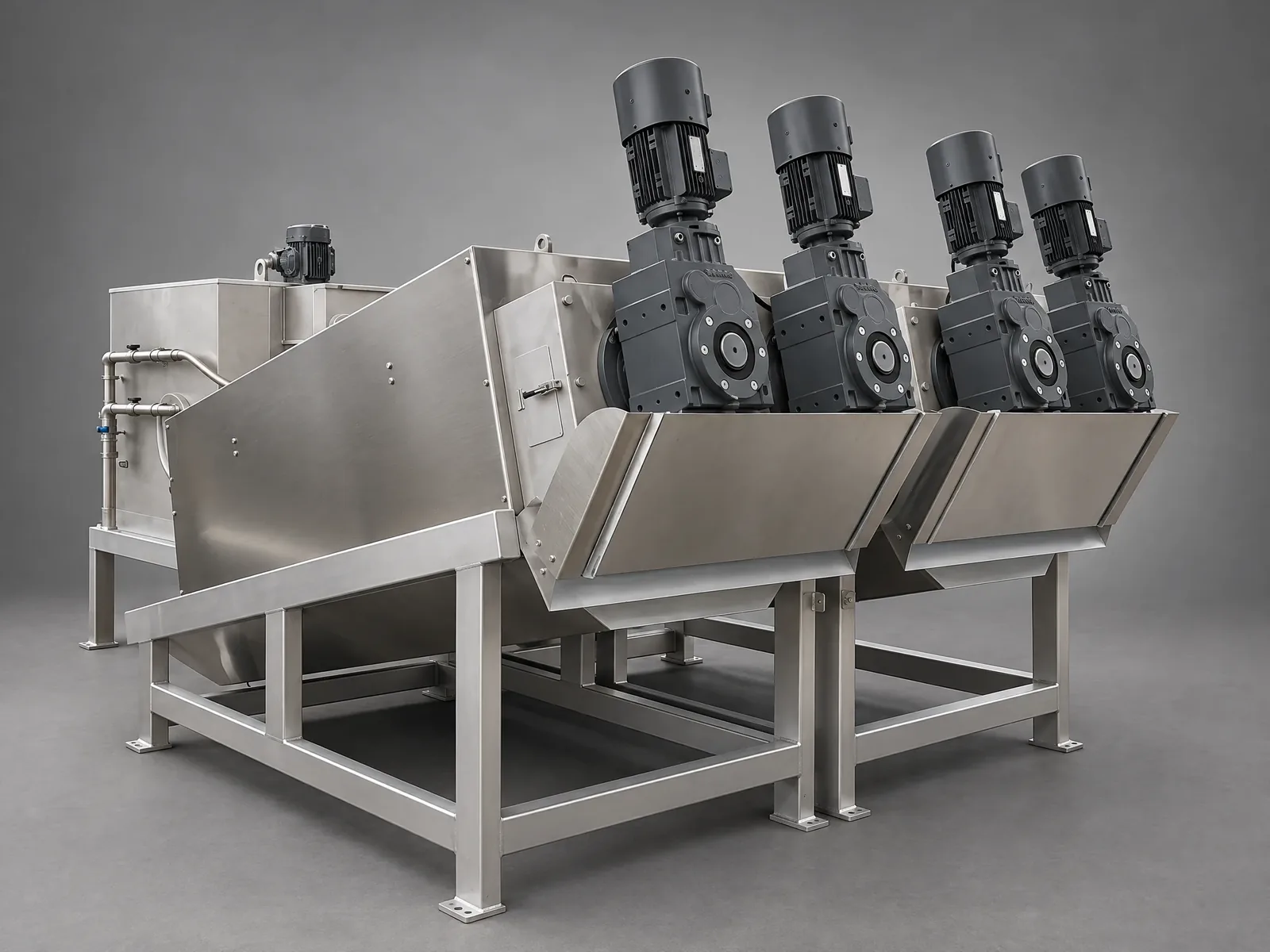
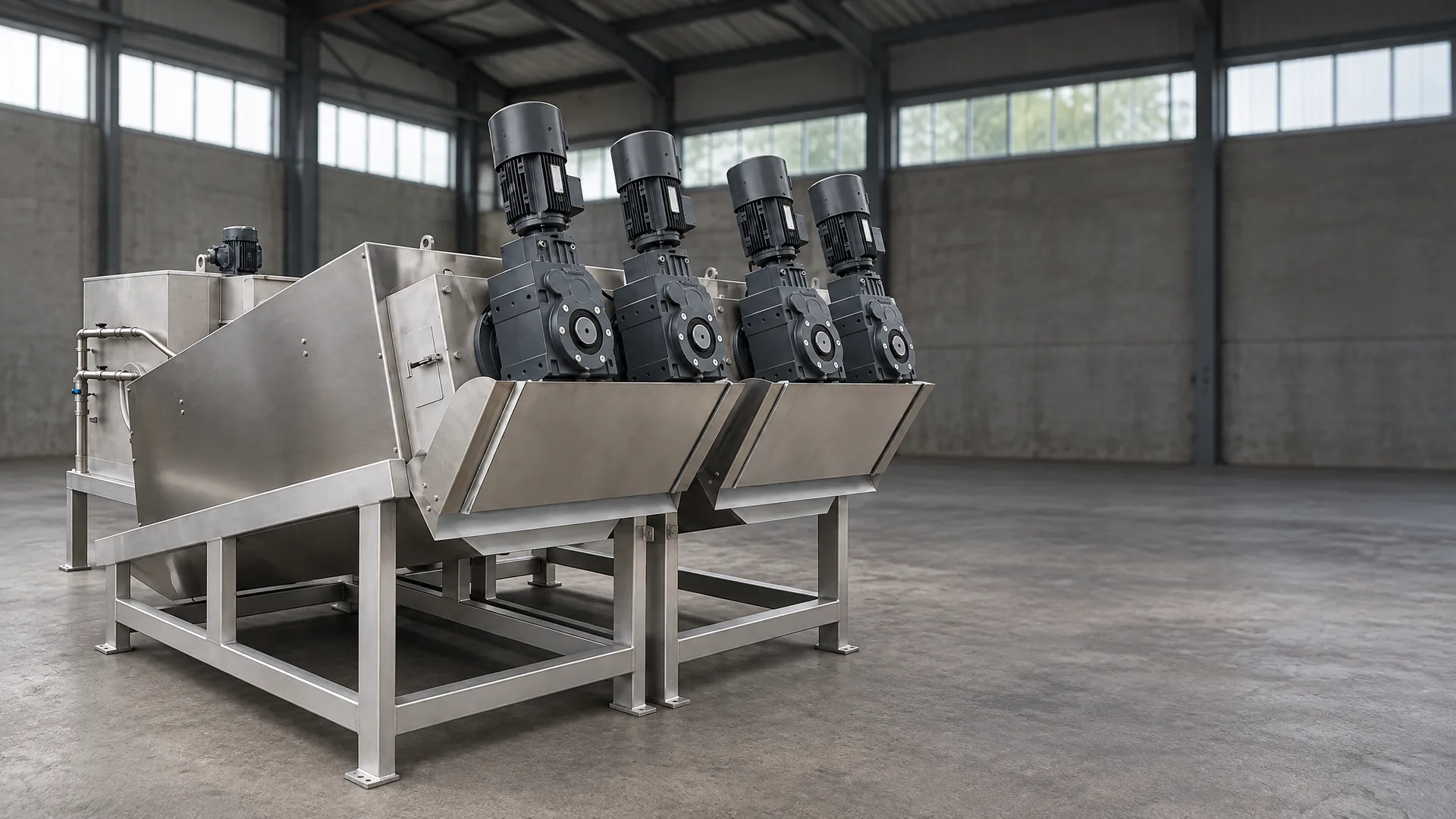
RF Series Screw Press
Four-Screw Configuration
Two twin dewatering units on a common stainless steel frame — maximum throughput with a small footprint.
Explore the RF seriesEngineering Assessment
Ready to Find the Right Screw Press?
Our engineering team provides application-specific screw press sizing and selection — based on your sludge type, flow rate, and dewatering targets.