Sludge Types
Municipal Sludge
Understanding municipal sludge for optimal dewatering
Municipal Sludge Overview
Municipal wastewater treatment generates several types of sludge depending on the treatment process. Each type has different dewatering characteristics, polymer requirements, and achievable cake solids. Understanding these differences is essential for proper screw press sizing and operation.
Sludge Types
Primary Sludge
Settles in primary clarifiers. Typically 3–6% DS. Relatively easy to dewater.
Waste Activated Sludge (WAS)
From biological treatment. Typically 0.5–1.5% DS. Requires polymer conditioning.
Digested Sludge
After anaerobic/aerobic digestion. 2–4% DS. Changed dewatering properties.
Mixed Sludge
Blend of primary and secondary. Properties vary with mixing ratio.
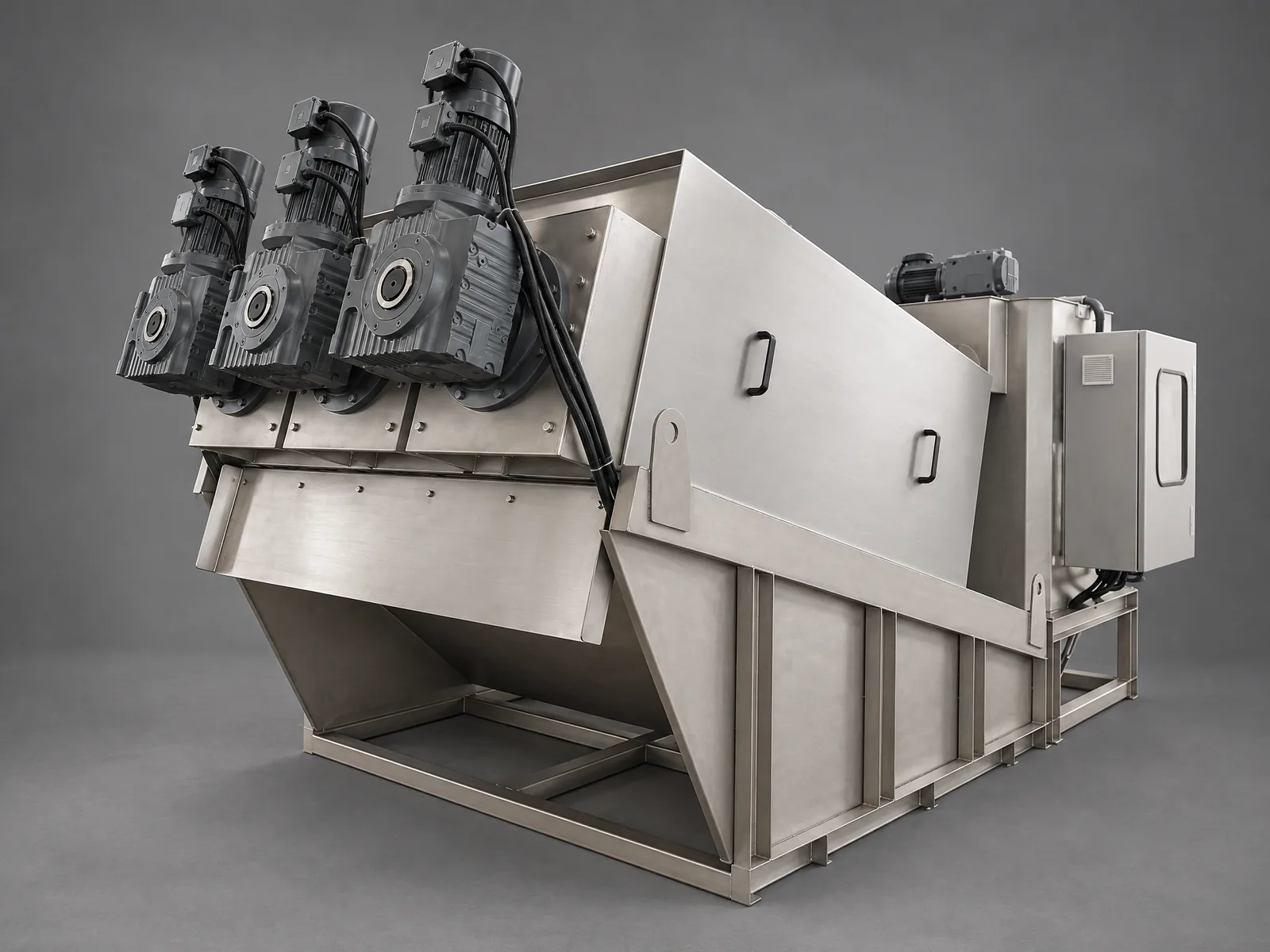
RF Series Screw Press
Three-Screw Dewatering Machine
Individually driven screws at low speed — quiet, energy-efficient and easy to maintain.
Explore the RF seriesEngineering Assessment
Ready to Find the Right Screw Press?
Our engineering team provides application-specific screw press sizing and selection — based on your sludge type, flow rate, and dewatering targets.