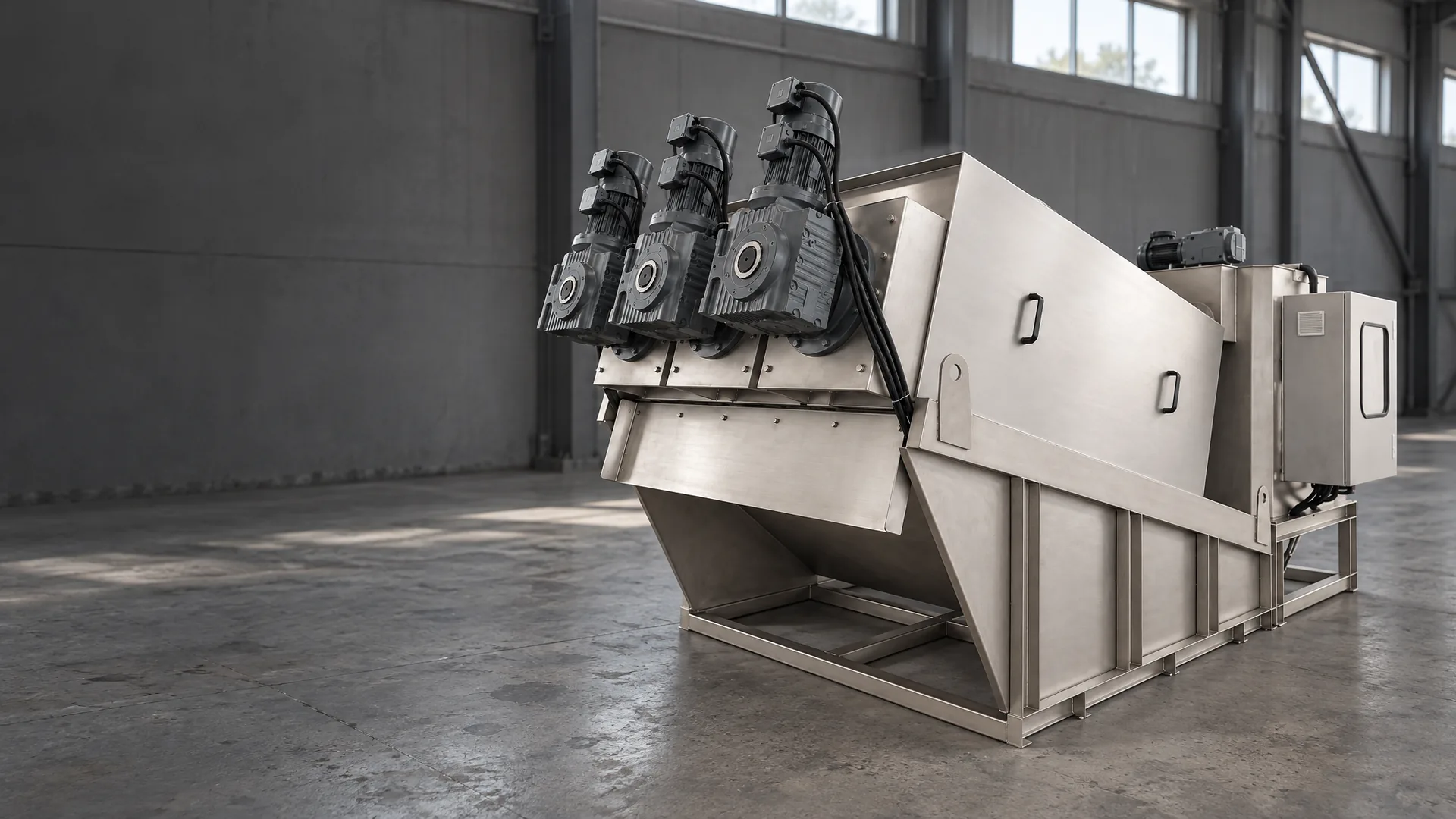
Sizing
Screw Press Sizing
Step-by-step guide to screw press equipment selection
Sizing Methodology
Screw press sizing starts with the dry solids load — the mass of dry solids that must be processed per hour. This is the product of sludge flow rate (m³/h) and feed dry solids concentration (% DS).
DS Load (kg DS/h) = Flow (m³/h) × Feed DS (%) × 10
Once the DS load is established, the appropriate RF model can be selected from the performance table. Additional factors including operating hours, redundancy requirements, and sludge characteristics refine the final selection.
Sizing Steps
- 1Determine sludge flow rate (m³/h or m³/d)
- 2Measure or estimate feed dry solids concentration (% DS)
- 3Calculate dry solids load: DS Load = Flow × DS% × 10
- 4Define operating hours per day and redundancy requirements
- 5Select RF model from the performance table
- 6Validate selection with sludge characterization data
- 7Request engineering assessment for final configuration
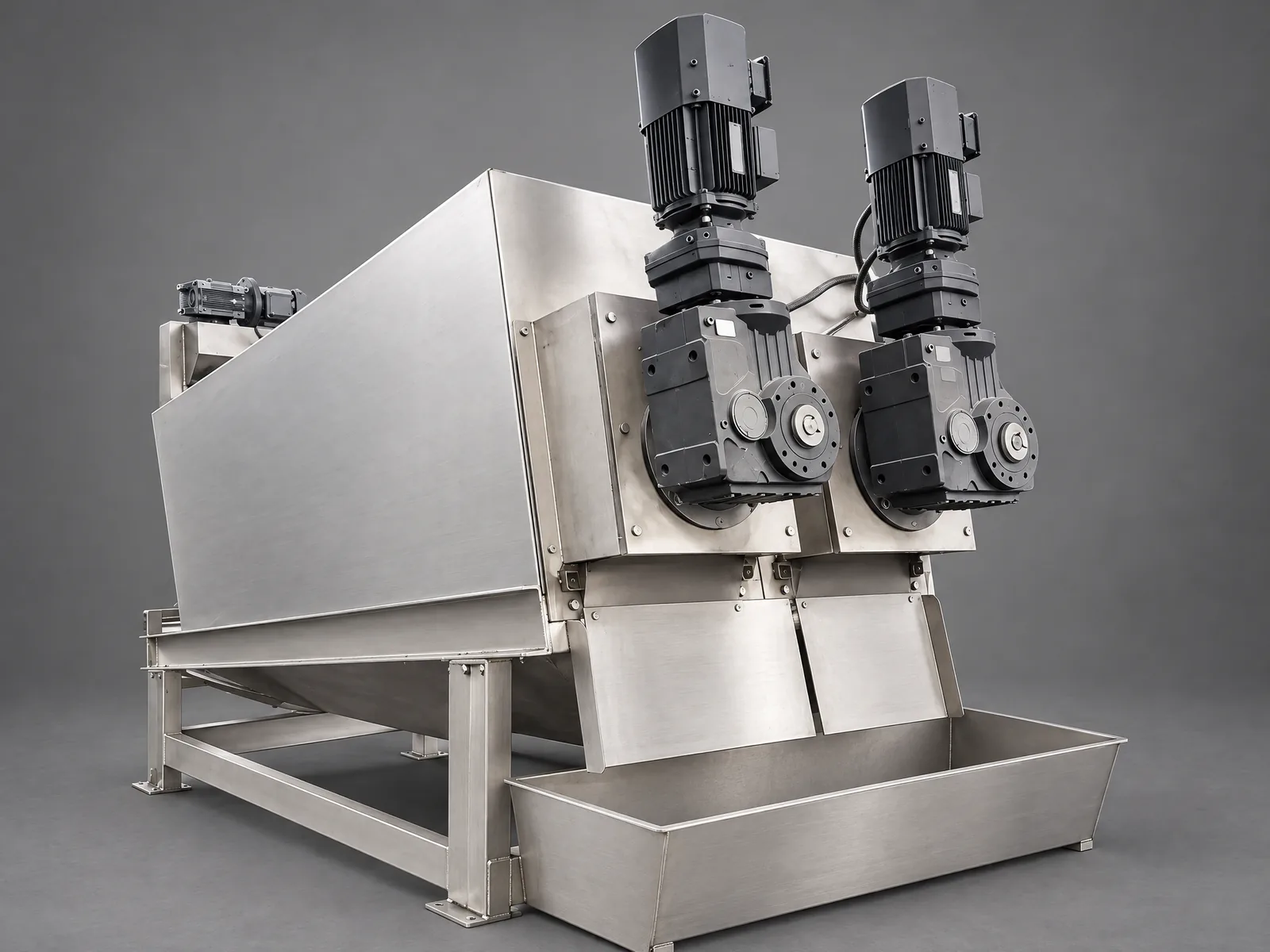
RF Series Screw Press
Sludge Cake Discharge
The dewatered cake drops into a discharge trough — ready for a conveyor, container or skip.
Explore the RF seriesEngineering Assessment
Ready to Find the Right Screw Press?
Our engineering team provides application-specific screw press sizing and selection — based on your sludge type, flow rate, and dewatering targets.