Sizing
Feed Solids
The solids content entering the press
Feed solids is the dry-solids concentration of the sludge as it enters the press. It sets the starting point for dewatering — the higher the feed solids, the less water there is to remove per kilogram of cake.
The starting point for dewatering
Higher feed solids generally means higher solids throughput for the same hydraulic flow, lower relative polymer demand and often drier cake, because the machine spends less of its capacity draining free water. This is why pre-thickening — by gravity, drum thickener or an integrated thickening zone — is often worthwhile ahead of the press. Very thick feed, however, can bridge or feed unevenly and may need dilution or agitation.
Typical feed solids ranges
- Waste activated sludge: often around 0.5–1.5% DS.
- Mixed / primary sludge: often around 1–4% DS.
- Pre-thickened sludge: often around 4–6% DS.
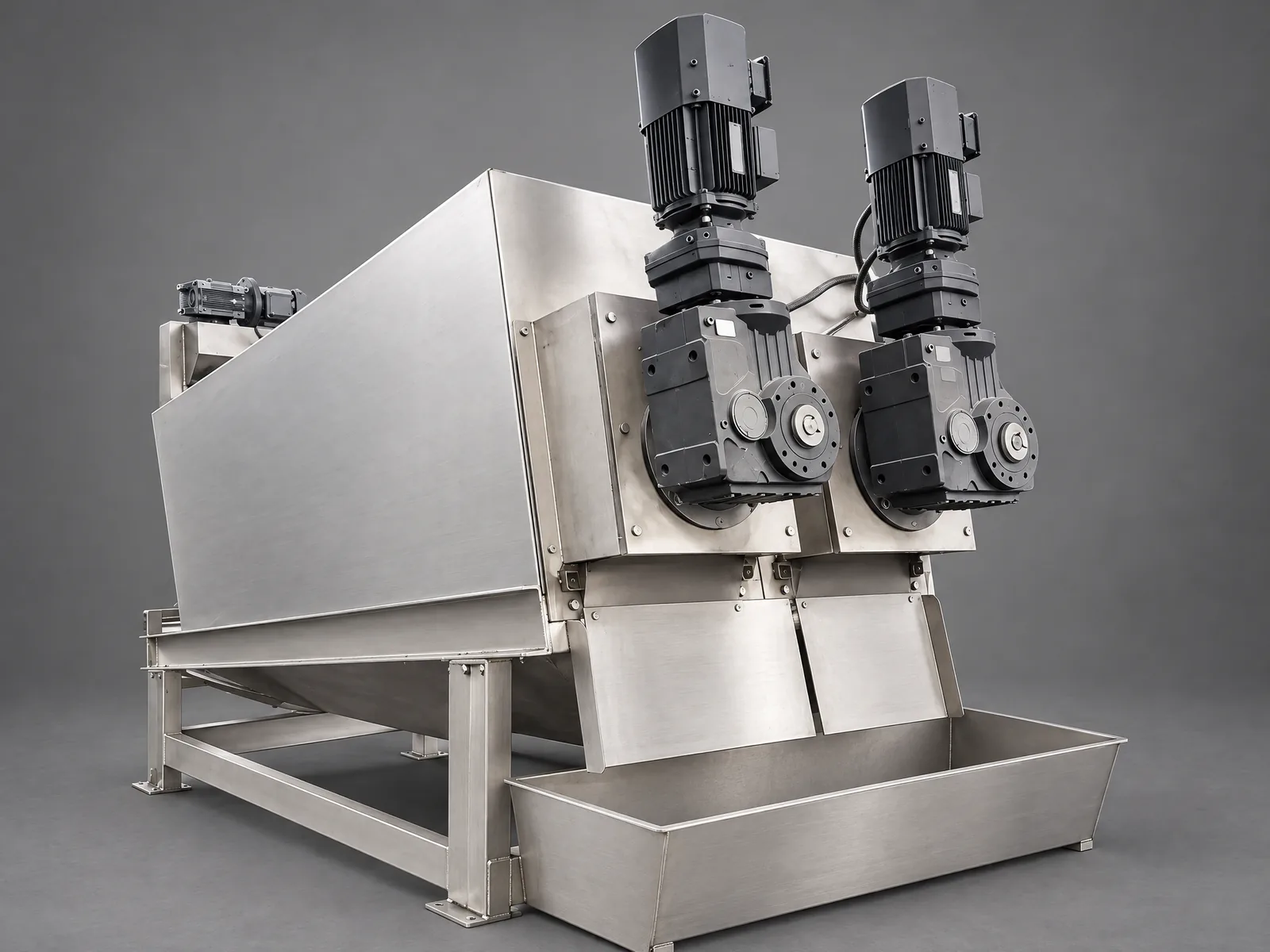
RF Series Screw Press
Sludge Cake Discharge
The dewatered cake drops into a discharge trough — ready for a conveyor, container or skip.
Explore the RF seriesEngineering Assessment
Ready to Find the Right Screw Press?
Our engineering team provides application-specific screw press sizing and selection — based on your sludge type, flow rate, and dewatering targets.