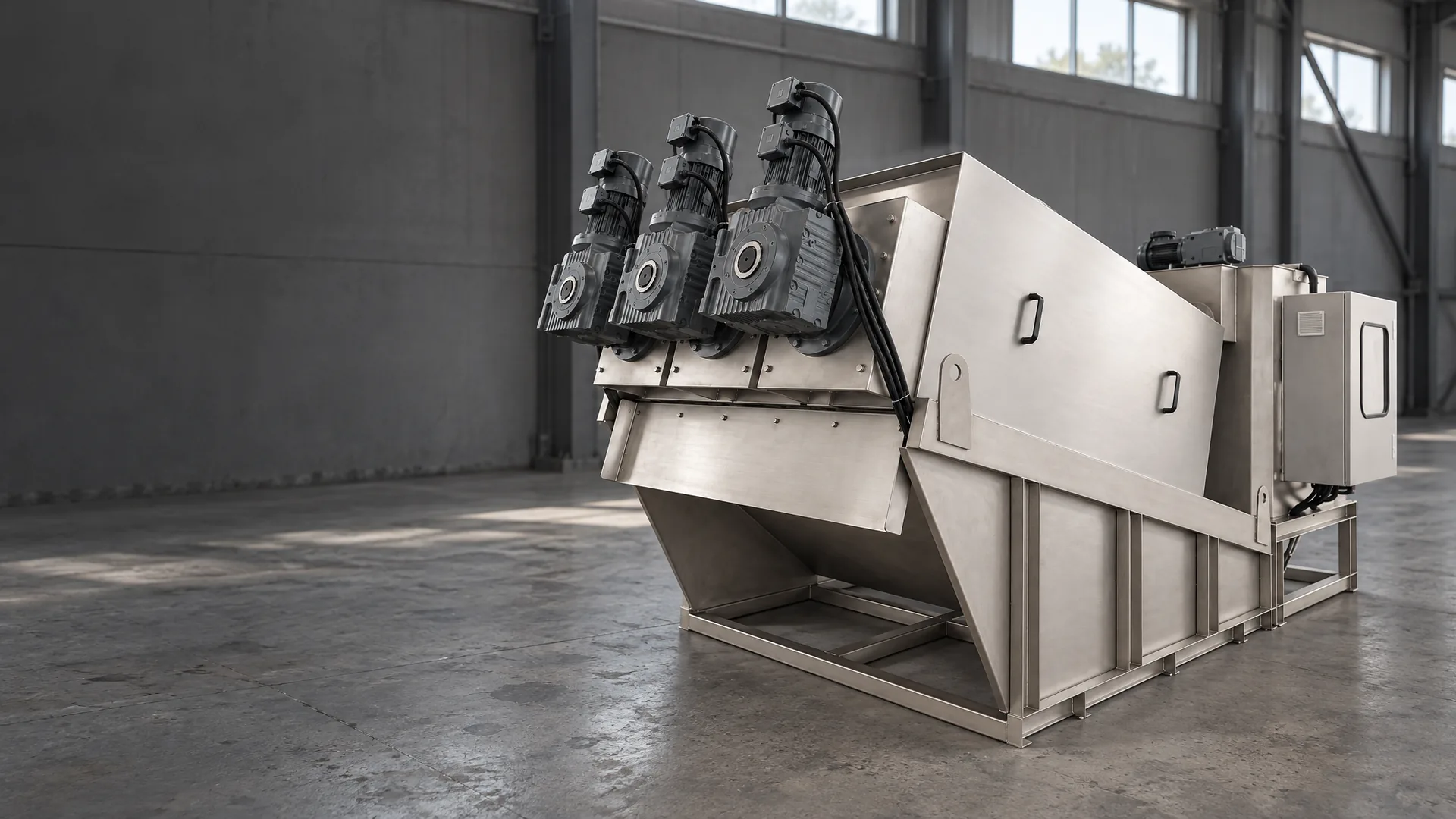
Operation & Maintenance
Wash-Water Management
Keeping the screen clean with minimal water
Screw presses use far less wash water than belt presses or centrifuges, but wash-water quality, pressure and cycle timing still matter. Correct wash management keeps the screen open without wasting water or diluting the recycle stream.
How wash water is used
Because the ring screen is mechanically self-cleaning, wash water is applied intermittently rather than continuously. A spray bar flushes the screen on a timed cycle to remove any fines the ring action leaves behind. Typical consumption is a fraction of that of a belt filter press, and no high-pressure pump is required.
Wash water can often be plant service water or clarified effluent rather than potable water, further reducing operating cost.
Wash-water good practice
- Use screened or clarified water to avoid clogging the spray nozzles.
- Tune cycle frequency to sludge type — oily sludge needs more.
- Route wash water and filtrate back to the plant inlet.
- Check nozzles periodically for scaling or blockage.
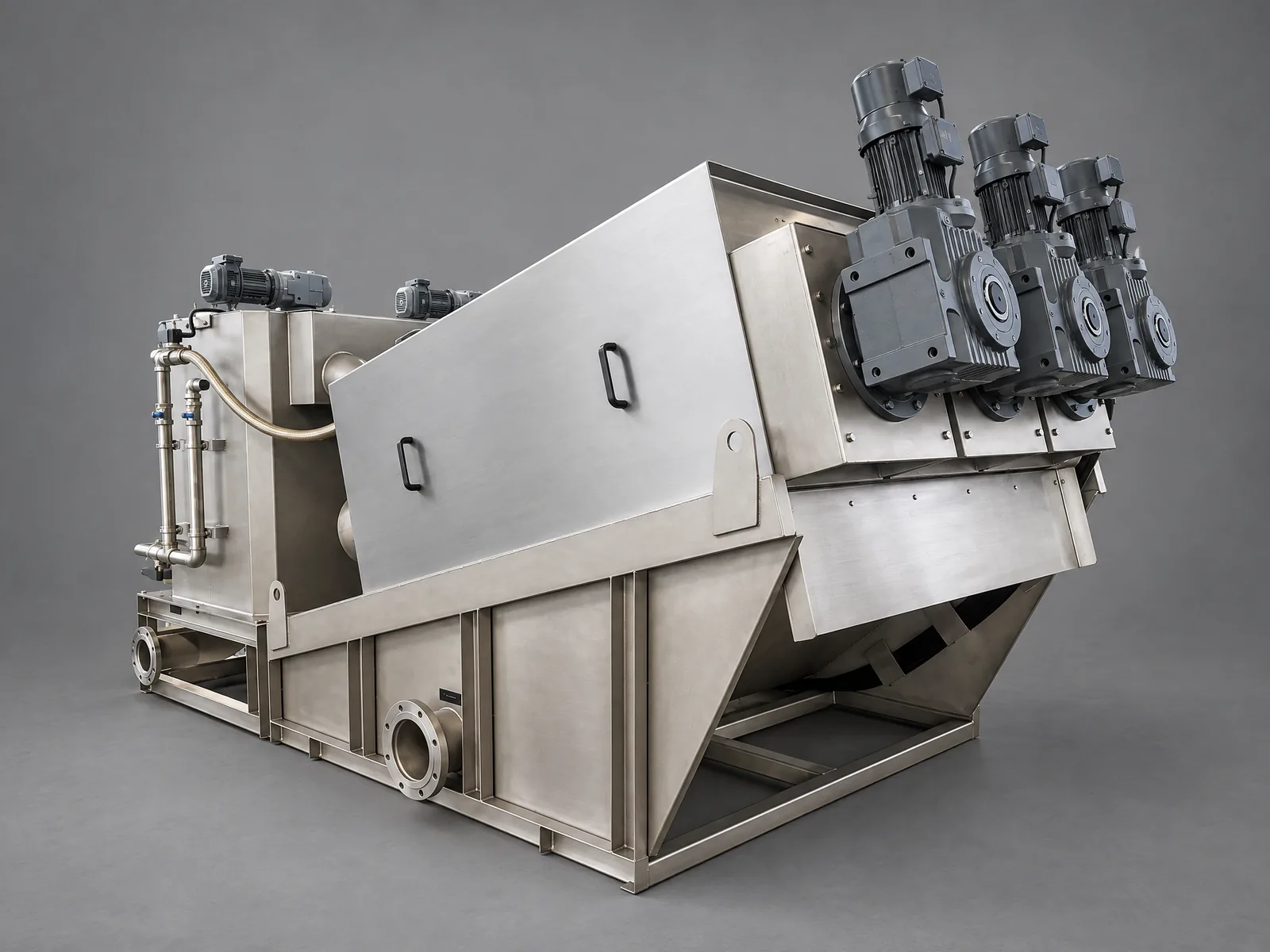
RF Series Screw Press
Flocculation Tank & Connections
Integrated flocculation with mixer drive, polymer piping and flanged filtrate outlets for straightforward installation.
Explore the RF seriesEngineering Assessment
Ready to Find the Right Screw Press?
Our engineering team provides application-specific screw press sizing and selection — based on your sludge type, flow rate, and dewatering targets.