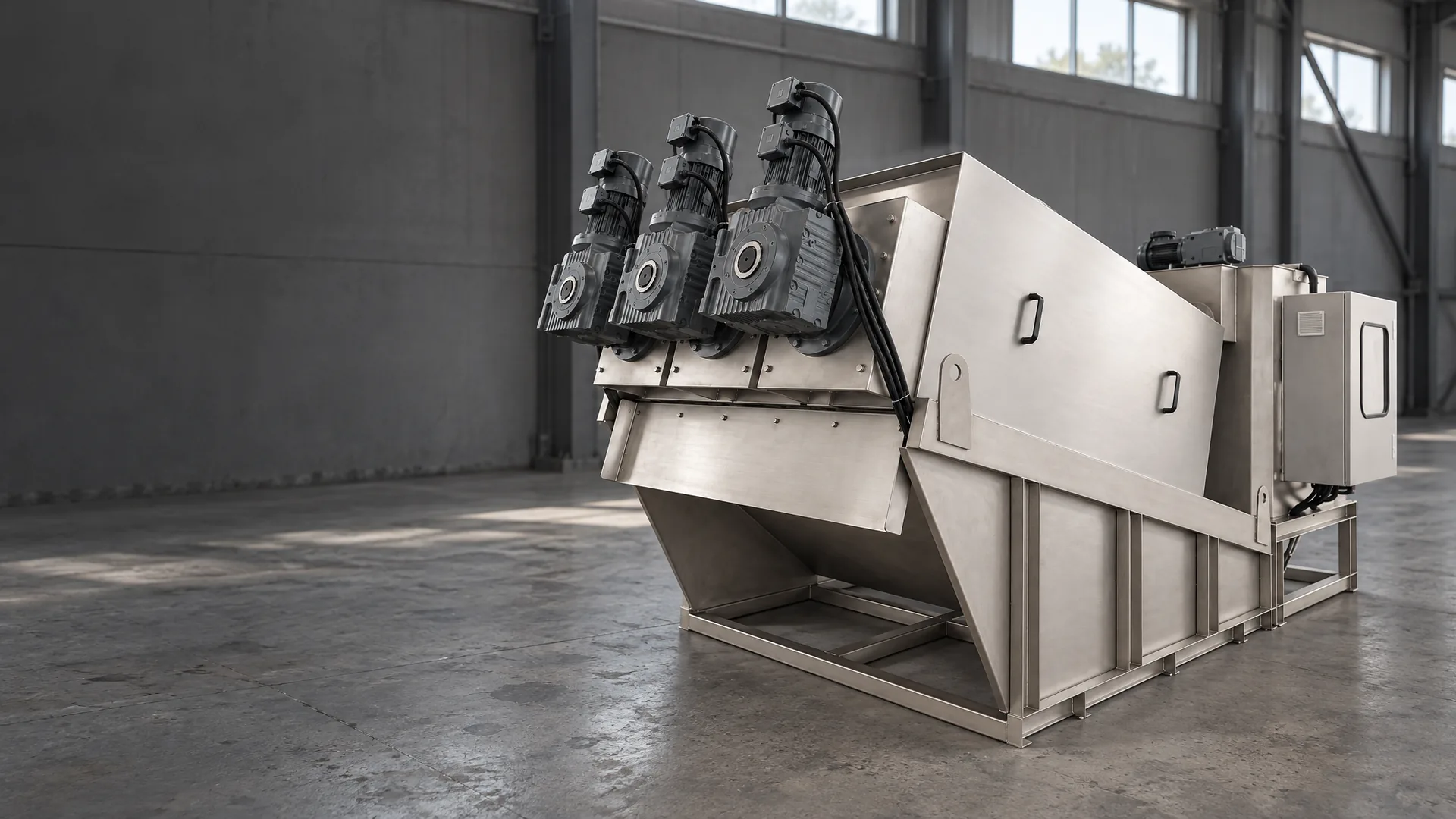
Screw Press Start-Up Procedure
Bringing the dewatering system online in the right sequence
A correct start-up sequence protects the equipment, avoids polymer waste and gets the machine to stable cake quality quickly. The key is to establish flocculation before feeding sludge and to begin at conservative set points.
Start-up sequence
- 1Pre-start checks
Confirm guards in place, no alarms, polymer ready, wash-water supply available and drain lines open.
- 2Start wash-water and screen wetting
Wet the screen so the first flocs drain freely rather than blinding a dry screen.
- 3Start the screw rotation
Begin at a moderate speed to confirm smooth, quiet running and correct direction.
- 4Start polymer dosing
Establish flocculation in the tank before sludge arrives so the first sludge is already conditioned.
- 5Introduce sludge feed slowly
Ramp the feed pump up gradually and watch floc formation and filtrate clarity.
- 6Trim to target
Adjust polymer, screw speed and back pressure until cake solids and filtrate quality reach targets.
Why sequence matters
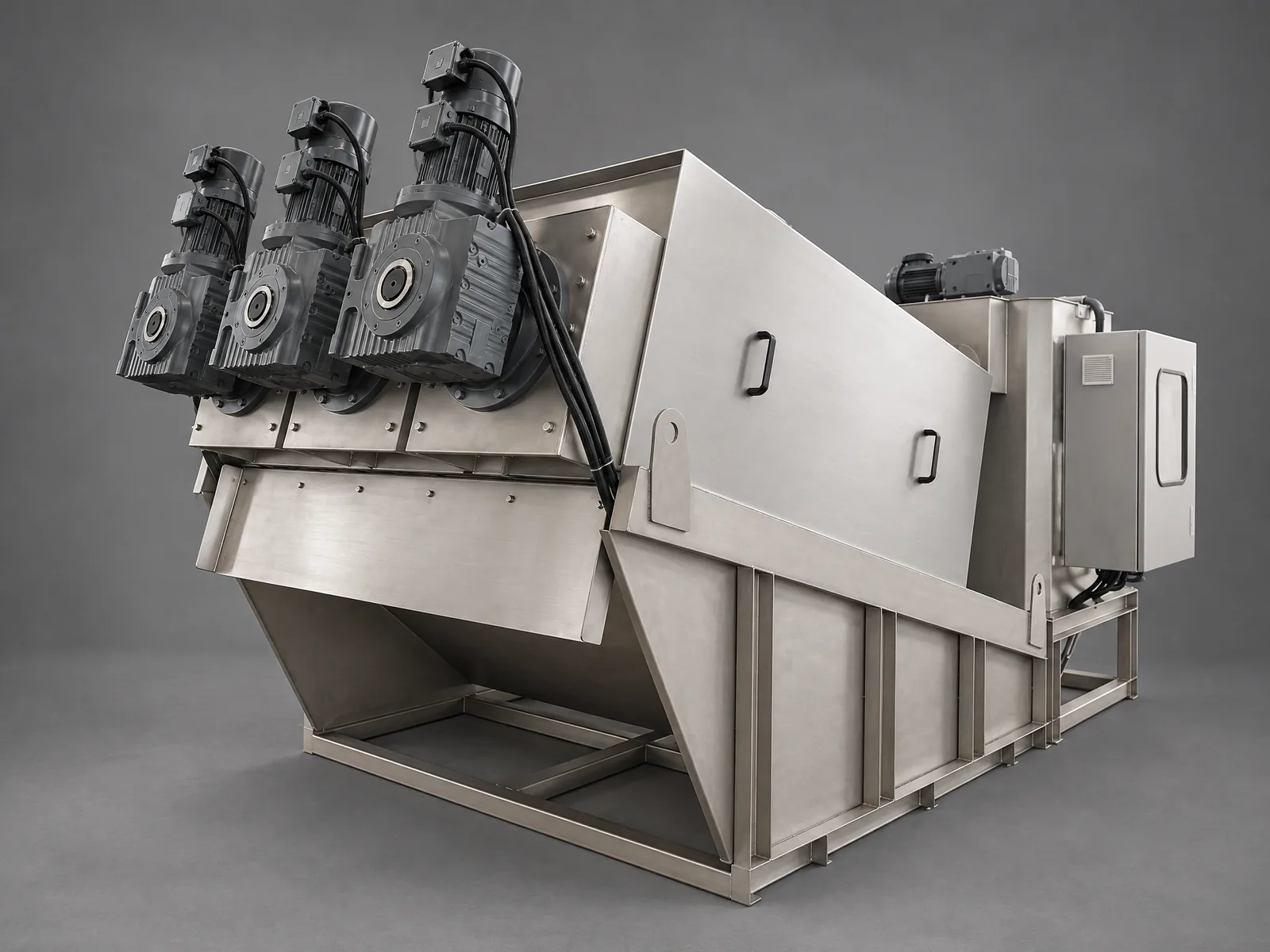
Three-Screw Dewatering Machine
Individually driven screws at low speed — quiet, energy-efficient and easy to maintain.
Explore the RF seriesReady to Find the Right Screw Press?
Our engineering team provides application-specific screw press sizing and selection — based on your sludge type, flow rate, and dewatering targets.