Comparisons
Sludge Thickening vs. Sludge Dewatering
Two distinct solids-reduction steps explained
Overview
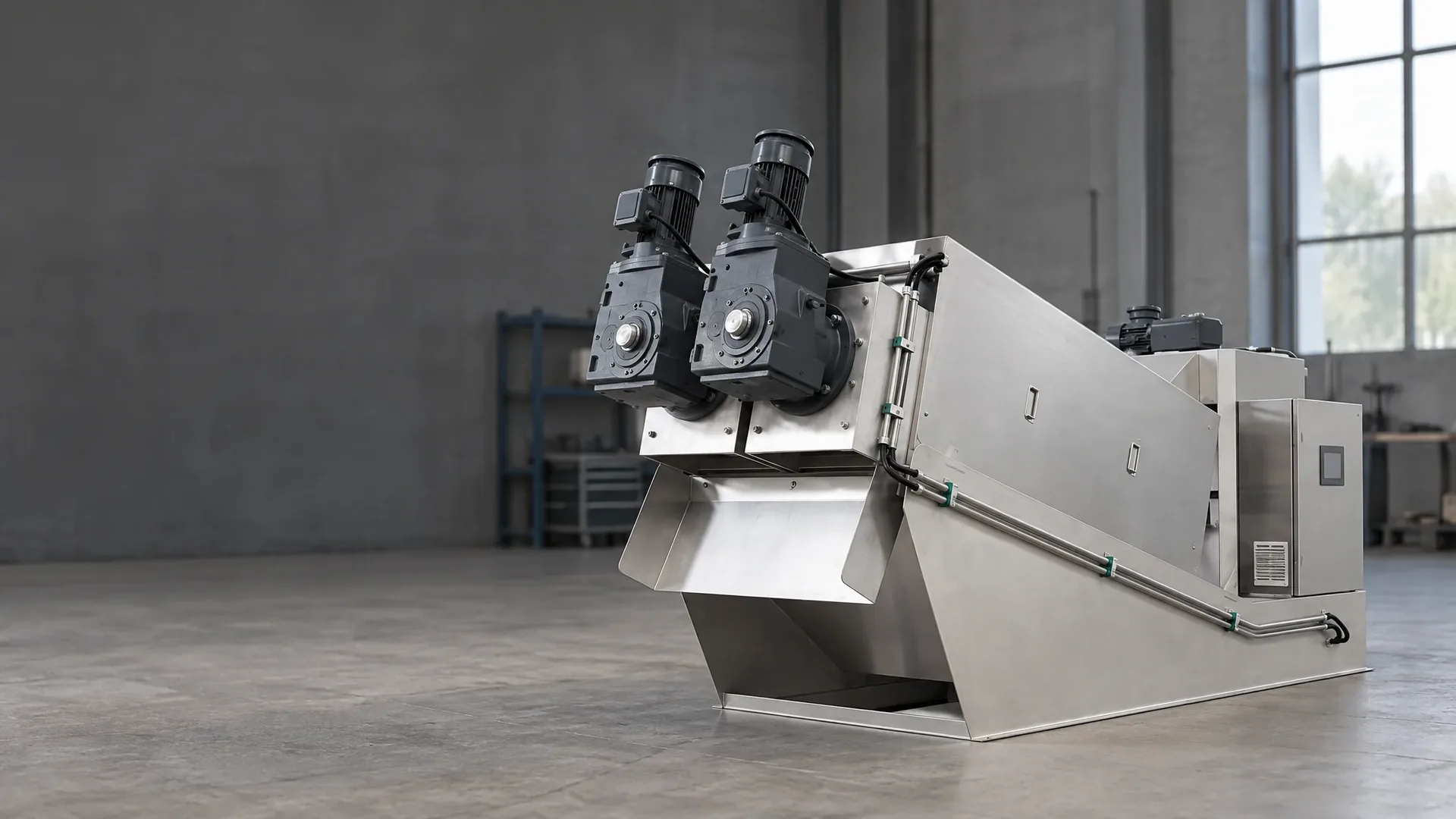
Thickening and dewatering are two sequential steps in sludge treatment. Thickening raises solids from roughly 0.5–1% to 4–8% DS, mainly reducing volume before digestion or dewatering. Dewatering then raises solids from a few percent to a spadeable or stackable cake of 15–25%+ DS for transport and disposal. A screw press can perform both roles depending on configuration.
Comparison
| Aspect | Thickening | Dewatering |
|---|---|---|
| Goal | Volume reduction | Produce transportable cake |
| Input DS | 0.5–1% | 2–6% |
| Output DS | 4–8% | 15–25%+ |
| Output state | Pumpable | Spadeable/stackable |
| Screw press role | Thickening mode | Full dewatering |
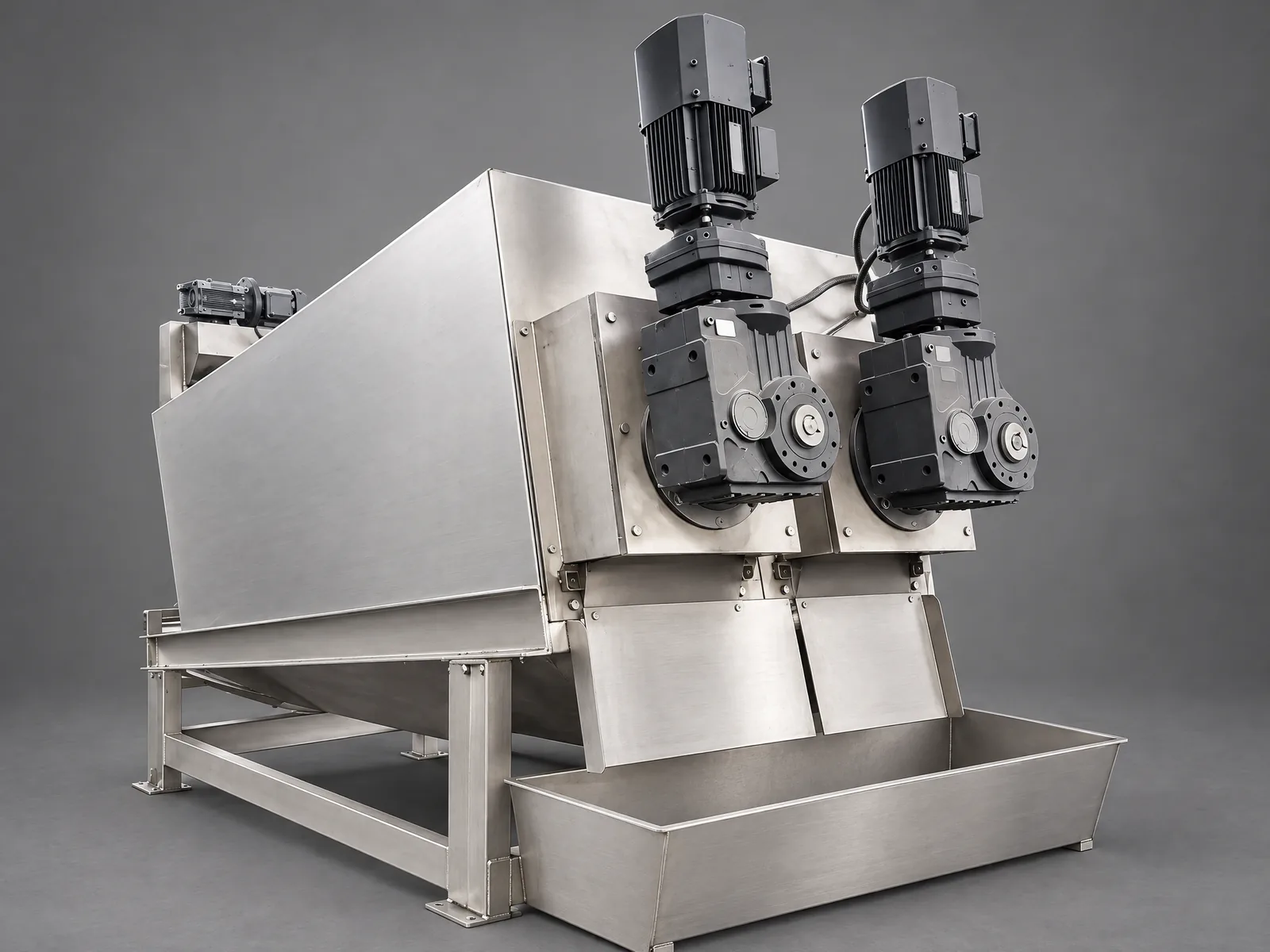
RF Series Screw Press
Sludge Cake Discharge
The dewatered cake drops into a discharge trough — ready for a conveyor, container or skip.
Explore the RF seriesEngineering Assessment
Ready to Find the Right Screw Press?
Our engineering team provides application-specific screw press sizing and selection — based on your sludge type, flow rate, and dewatering targets.