Comparisons
Screw Press vs. Chamber Filter Press
Continuous automation vs. maximum cake dryness
Overview
Chamber filter presses produce very dry cakes in a discontinuous batch cycle, at the cost of high labour, large footprint and frequent filter-cloth handling. Screw presses run continuously and unattended with far lower energy and maintenance, at slightly lower cake dryness. The right choice depends on whether maximum dryness or minimum operating effort dominates your requirements.
Head-to-Head
| Criteria | Screw Press | Chamber Filter Press |
|---|---|---|
| Operation | Continuous | Batch cycle |
| Cake DS | 15–25% | 30–45% |
| Automation | Full — 24/7 unattended | Limited — manual cake discharge |
| Labour | Minimal | High |
| Energy | Very low | Medium (high-pressure pumps) |
| Footprint | Compact | Large |
| Oily sludge | Excellent | Poor (cloth blinding) |
Choose a screw press when
- Unattended, continuous 24/7 operation is required
- Labour and floor space are limited
- Sludge is oily, greasy or fibrous
- Cake dryness of 15–25% DS is sufficient for disposal
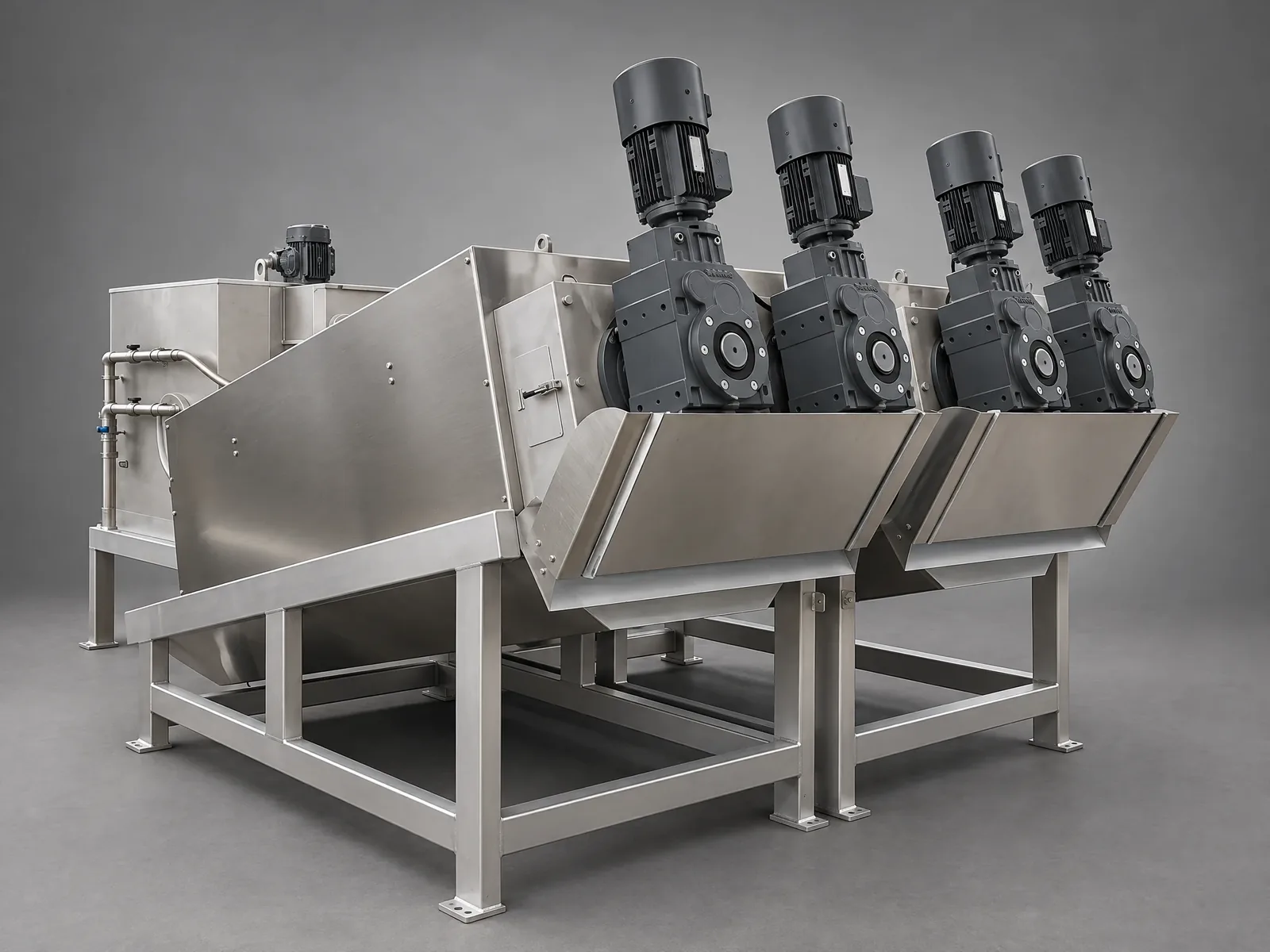
RF Series Screw Press
Four-Screw Configuration
Two twin dewatering units on a common stainless steel frame — maximum throughput with a small footprint.
Explore the RF seriesEngineering Assessment
Ready to Find the Right Screw Press?
Our engineering team provides application-specific screw press sizing and selection — based on your sludge type, flow rate, and dewatering targets.