Comparisons
Screw Press vs. Centrifuge
Comparing two fundamentally different dewatering approaches
Overview
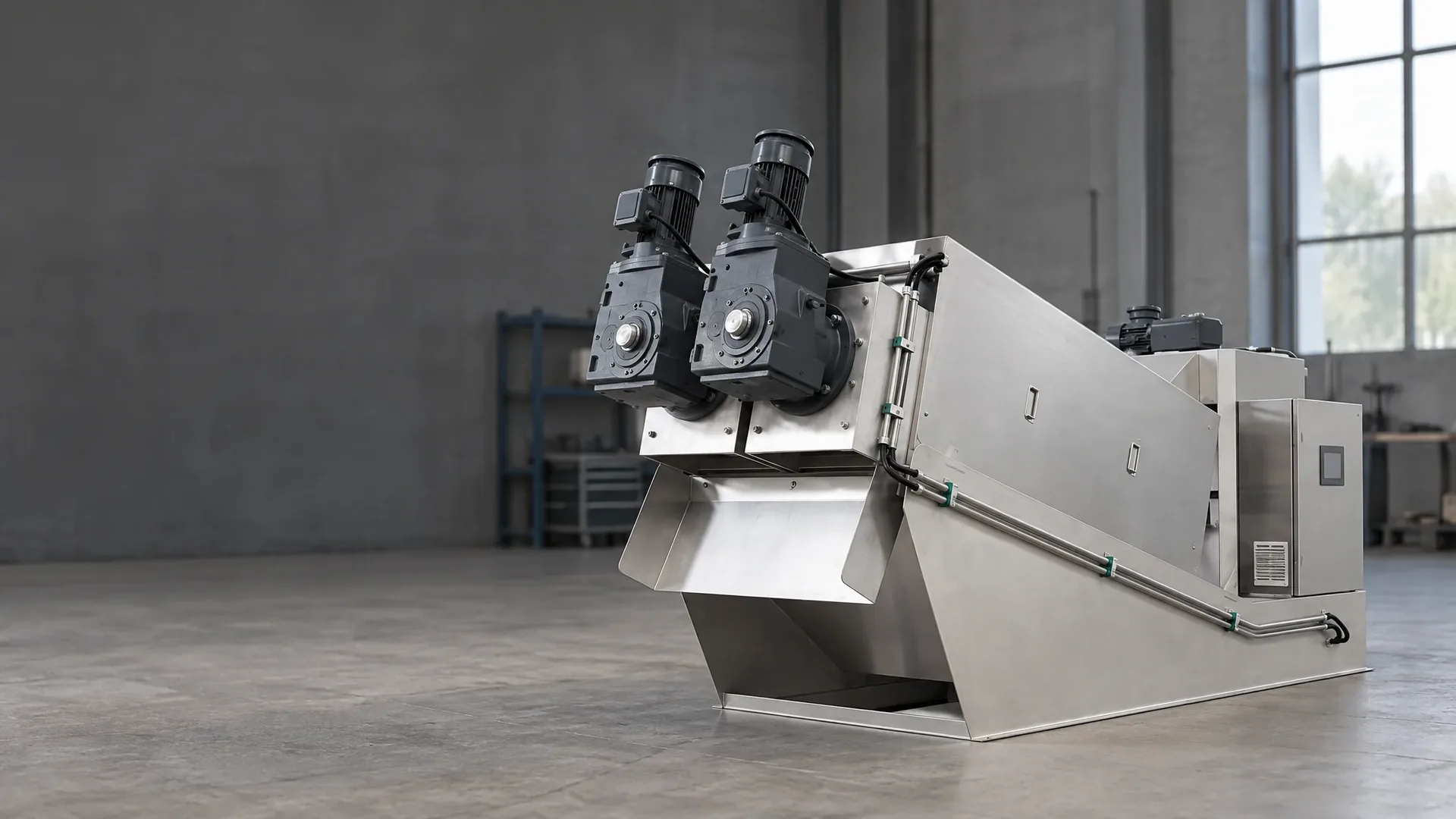
Centrifuges (decanter centrifuges) and screw presses represent two fundamentally different approaches to sludge dewatering. Centrifuges use high centrifugal force to separate solids from liquids, while screw presses use slow mechanical conveyance and filtration.
Comparison
| Criteria | Screw Press | Centrifuge |
|---|---|---|
| Energy | Very low (0.2–5 kW) | High (30–100+ kW) |
| Noise | < 65 dB(A) | 85–100 dB(A) |
| Vibration | Negligible | Significant (foundations needed) |
| Maintenance | Very low | High (bearings, scroll wear) |
| Oily Sludge | Excellent | Good (but re-emulsification risk) |
| Cake DS (WAS) | 15–22% | 18–28% |
| Throughput | Up to 1,664 kg DS/h | High (>2,000 kg DS/h) |
| Operator Need | Minimal | Medium |
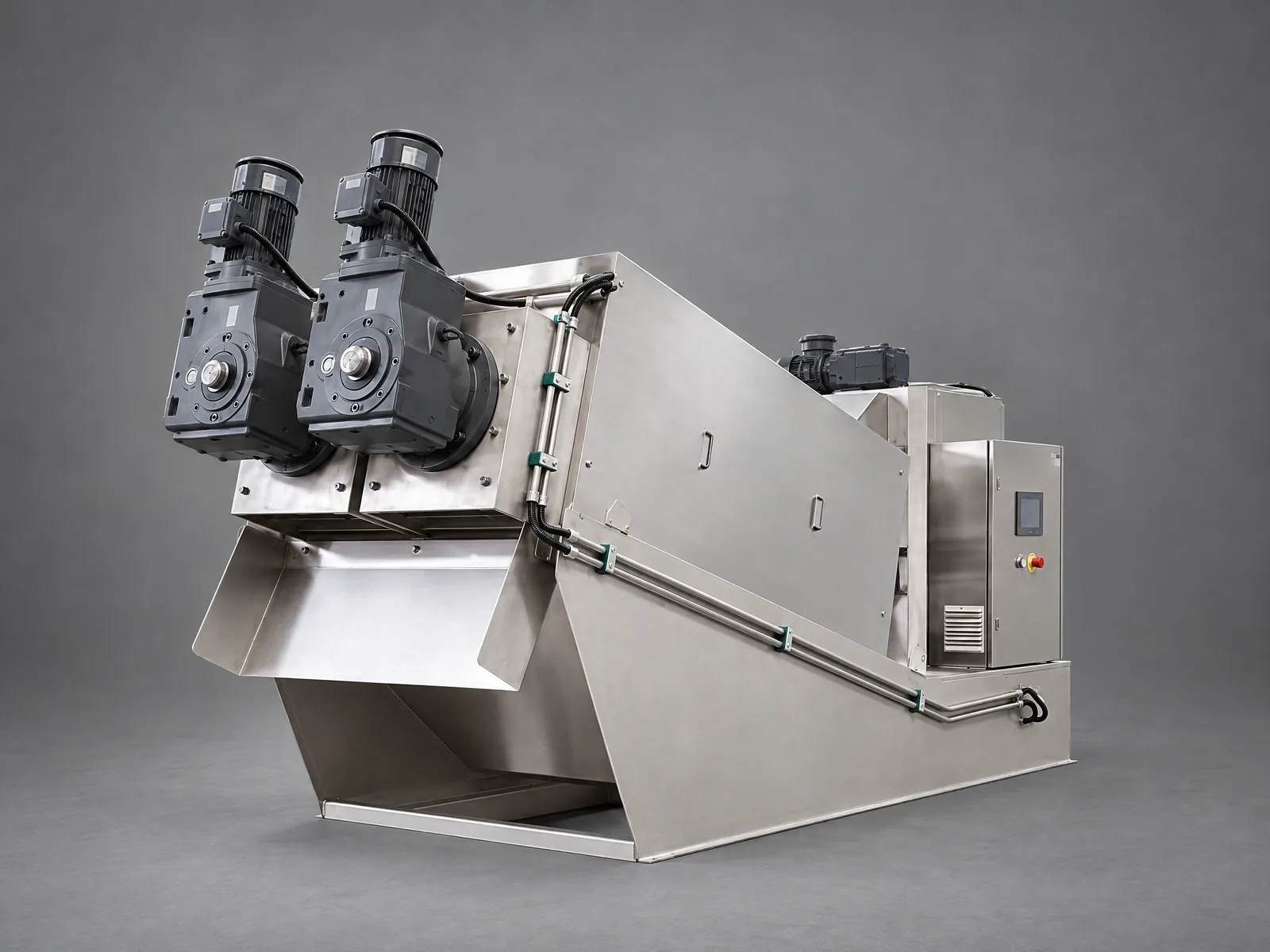
RF Series Screw Press
Two-Screw Unit with Control Panel
Ready-to-connect dewatering unit with touch panel control, flocculation tank and cake discharge chute.
Explore the RF seriesEngineering Assessment
Ready to Find the Right Screw Press?
Our engineering team provides application-specific screw press sizing and selection — based on your sludge type, flow rate, and dewatering targets.